Traveling with a newborn: When and how to start
Updated Sep 03, 2026
Up-to-date
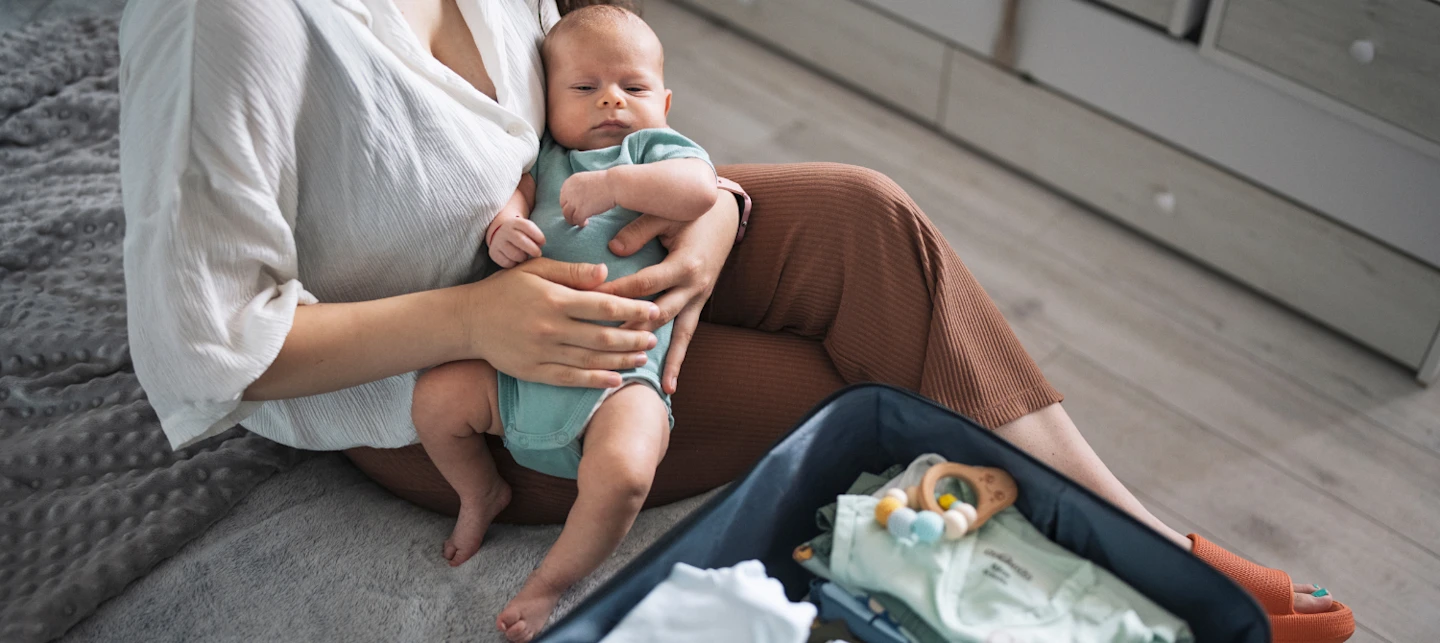


Many caregivers wonder when it’s safe to travel with a newborn — and how early babies can handle longer trips, whether by plane, train, or automobile. Maybe you’re excited to show your baby the world, hoping to keep some sense of adventure in your own life, or simply figuring out how travel fits into this new chapter. And with a little planning and flexibility, traveling with your baby is often possible sooner than people expect. This guide breaks down timing, safety, and practical tips of traveling with your little one, so you can make choices that feel manageable and realistic for your family.
When do caregivers start thinking about traveling with a newborn?
Traveling as a family might become a consideration shortly after your baby’s birth, perhaps because of family needs, work obligations, or plans made long before your little one’s arrival.
Every family is unique, but some common reasons caregivers may start thinking about traveling with a newborn include:
Visiting family or loved ones who live far away
Work-related travel, relocation, or military moves
Planned events like weddings, holidays, or important milestones
Simply wanting to keep travel — big or small — part of life after having a baby
Travel decisions with a newborn tend to be practical, personal, and highly individual to each family. Most caregivers are trying to balance what’s possible and safe with what feels worth the effort in those challenging early weeks of parenthood.
When is it safe to travel with a newborn?
Age alone doesn’t necessarily determine whether travel is safe for your baby. In many cases, safety comes down to the details of the trip itself — including exposure to crowds, how long you’ll be in transit, and what support is available once you arrive.
The American Academy of Pediatrics (AAP) notes that travel itself isn’t inherently dangerous for healthy newborns, but situations involving crowded spaces and long periods in close quarters — such as busy airports, trains, buses, cruise liners, or other crowded areas — can increase exposure to illness in the early weeks [1]. That’s why some families choose to wait when they can, especially for longer or more complex trips.
When weighing whether travel makes sense, many families consider:
Your baby’s overall health: Full-term, generally healthy newborns usually have more flexibility than babies born early or with unique medical needs.
Exposure to crowds or illness: Airports, public transportation, and large gatherings can increase exposure to germs, especially in the first months.
Length and complexity of travel: A local road trip, train ride, or short direct flight is very different from a multi-leg journey with long hours or days in transit.
Access to medical care at your destination: Knowing where you’d go if you needed care can add peace of mind, especially when traveling far from home.
Travel safety is mainly about minimizing stress and unnecessary possible exposure to germs and illnesses, rather than meeting a specific age threshold. Your family’s medical provider can help you think through these factors based on your baby and your plans.
How old does a baby have to be to fly?
Guidelines for flying with a newborn can vary and they’re often shaped by airline policies along with your baby’s immune system development and medical history. For most healthy, full-term babies, this is less about safety and more about timing, comfort, and avoiding your child getting sick.
According to the American Academy of Pediatrics (AAP), it’s best to avoid flying with a newborn until they’re at least 7 days old [1]. In general, most airlines allow newborns to fly within the first couple of weeks, though some may require additional age documentation (such as your baby’s birth certificate, hospital, or vaccination records). Ideally, many pediatricians and medical providers recommend waiting until your baby is around 2 - 3 months old, when their immune system is more developed, and they’ve received early vaccinations [1].
Here’s a snapshot of what caregivers need to know when planning flights with a newborn:
Travel type | Minimum age to begin travel | Notes |
Domestic flights | At least one week old, and ideally, not before 2 - 3 months old | Airline policies vary. Comfort and illness exposure are key factors for newborns and young babies |
International flights | Often several weeks or later, to around 3 months old | Travel documents, flight length, and pediatric guidance are important considerations |
Traveling by plane versus traveling by car with a newborn
How you travel can matter just as much as when you travel. Flying and driving each come with their own trade-offs, and neither is inherently better or worse. It often comes down to distance, logistics, and what feels most manageable for your family.
With air travel, families often think about airport crowds, keeping their baby comfortable during takeoff and landing, and feeding or soothing on the go. Car travel usually offers more control over timing and stops, but it also means being mindful of how long a newborn stays in a car seat and building in regular breaks.
The easiest mode of travel is often the one that fits your trip length, support system, and comfort level right now. Here’s a side-by-side look at how these two specific options tend to differ in the newborn phase:
Travel method | Common considerations | Typical concerns |
Plane | Cabin air pressure, crowded airports, and longer stretches in one place | Temporary ear discomfort, exposure to illness and germs |
Car | Time spent in a car seat, the flexibility to stop | Planning breaks, positioning, and longer travel days |
How to prepare for traveling with a newborn
You won’t be able to control every aspect of travel, but a little preparation can make it easier to respond to your baby’s needs once you’re on the move. You don’t need to plan for every scenario. Focusing on a few basics ahead of time can help the trip feel calmer and more manageable.
Helpful ways to prepare for traveling with a newborn or young infant include:
Pack feeding and diaper supplies within easy reach: Bring more than you think you’ll need, especially if delays are possible. Having essentials accessible (and not buried in your diaper bag or carry-on) is key — this isn’t often the time to pack “light.”
Stay flexible around timing: Newborn sleep and feeding needs can be unpredictable and change quickly, so it can be helpful to take a flexible approach by staying responsive to your baby’s cues and adjusting as you go.
Bring familiar comfort items: A favorite blanket, carrier, or swaddle can help signal comfort and routine, even in a new environment.
Keep it clean: Clean surfaces with wipes, wash hands frequently, and avoid crowded areas to prevent infection.
Check travel policies in advance: If you’re flying, review the airline’s rules on lap infants, car seats, and seating. While "lap babies" under age 2 are permitted, the AAP strongly recommends buying a seat and using a car seat [2].
Plan for safety: Newborns sleep often, but extended sleep in car seats isn’t recommended outside of active travel. On longer trips, plan regular breaks about every two hours so your baby can have time out from being in their car seat for too long [2]. The safest way to travel by plane is in an FAA-approved infant car seat, not in an exit row [2].
Think through logistics at your destination: Knowing where and how your baby will sleep, be fed, and changed can help you arrive feeling oriented rather than overwhelmed. Confirm that your destination has a safe sleep space — a firm, flat surface like a bassinet or pack-and-play. Avoid using inclined sleepers or couches for sleep, even while traveling.
6 tips for traveling with a newborn for the first time
The first trip with a newborn can feel like a lot — mostly because all the travel essentials you used to breeze through tend to take more time with a baby. For first trips, success usually looks less like “everything went smoothly” and more like “we figured it out as we went.”
Tip #1: Allow extra time for transitions
Diaper changes, feedings, and soothing often take longer when you’re away from home. Building in buffer time can help you move at your baby’s pace, instead of feeling rushed from one step to the next.
Tip #2: Feed your baby during takeoff, landing, or travel stops
If you’re flying, nursing, bottle-feeding, or offering a pacifier during takeoff and landing can help ease ear pressure [3]. During car or train travel, feeding at natural breaks can also be a calming reset for both of you.
Tip #3: Pack for the unexpected — and keep essentials accessible
Extra diapers, wipes, and outfits for both you and your baby come in handy when plans change or messes happen. If you can, try to have the essentials for feeding and changing within arm’s reach during travel. A little redundancy (and easy access) in your bag can reduce stress when dealing with unexpected delays or tight quarters if things don’t go exactly as planned.
Tip #4: Dress your baby in easy layers
Temperatures can vary widely between cars, planes, terminals, and rest stops. Layers make it easier to adjust quickly. Layers make it easier to adjust quickly to changing temperatures. Just remember to remove any hats or head coverings indoors or when your baby is sleeping to help prevent overheating and support safe sleep.
Tip #5: Use a carrier for hands-free movement
Safe babywearing can often be helpful in airports, stations, and crowded spaces. A newborn-appropriate carrier can make transitions easier while keeping your baby close and well supported, with their airway visible and chin off their chest.
Tip #6: Ask for help when you need it
From gate agents to fellow travelers, help is often available if you need an extra hand. Most people are more understanding than you might expect when they see you navigating travel with a newborn.
When to contact your pediatrician before traveling
In many cases, traveling with a newborn doesn’t require special medical clearance. That said, there are situations where a quick check-in with your medical provider can offer helpful guidance — or simply ease stress — before you hit the road.
Reach out to your pediatrician or medical provider before travel if:
Your baby was born prematurely. Babies born early may have different considerations around timing, exposure to new people and crowds, or travel duration.
Ongoing health concerns or medical conditions: Breathing issues, feeding challenges, or recent illnesses are all good reasons to consult your child’s doctor before embarking.
You’re planning international travel: Pediatricians and medical providers can help with timing, coordinating vaccinations, and thinking through destination-specific health considerations.
The trip will be long or logistically complex: Multi-day travel, long-haul flights, or limited access to care at the destination may warrant a conversation with your medical provider first.
You’re unsure whether travel feels right: Even without a specific medical issue, talking things through can help caregivers weigh their options more confidently before committing to a trip with a newborn.
Share article:

Note: The content on this site is for informational purposes only and should not replace medical advice from your doctor, pediatrician, or medical professional. If you have questions or concerns, you should contact a medical professional.
3 Sources
Share article:


