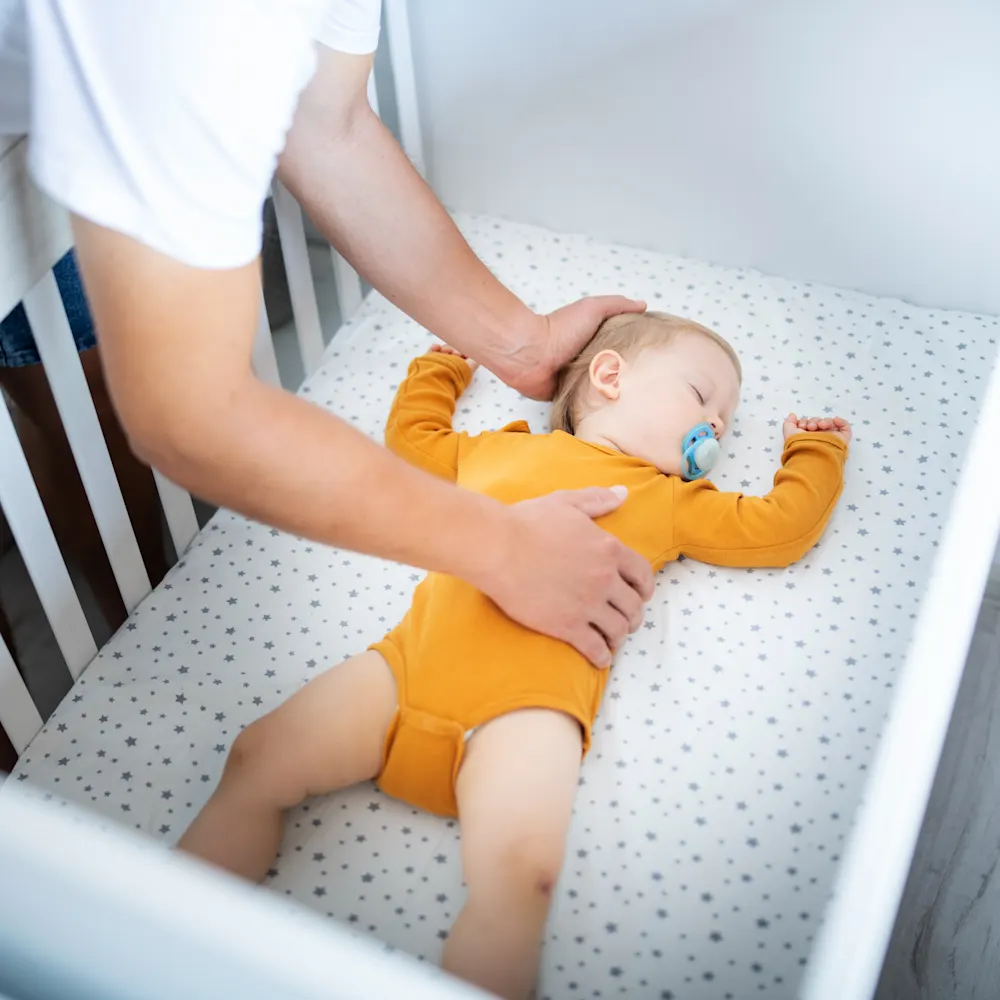
How to keep baby warm at night without compromising safety
Updated Sep 03, 2026
Up-to-date


By now, you’ve probably mastered the steps of bedtime — rocking, swaying, and singing lullabies on repeat. You want them cozy and comfortable, but never at the expense of safe sleep.
In this guide, we’ll walk you through everything you need to know to keep your baby warm for dreamland. From understanding ideal room temperatures to decoding TOG labels on sleepwear to reading the subtle signals your baby gives when they’re too warm or cold, we’ll cover practical tips that make safe sleep feel simple and achievable.
Ideal room temperature for safe baby sleep
Many guidelines suggest a nighttime room temperature of around 68 – 72°F (20 – 22°C) for babies, though some organizations recommend slightly cooler ranges depending on where you live [1]. Young babies can’t regulate body temperature as efficiently as adults [2]. A steady room temperature helps them regulate their body temperature more easily and supports better sleep.
This range sits comfortably between too chilly and too toasty, helping babies maintain a stable body temperature while supporting safe sleep practices. However, real life happens — it may not be realistic for your home to stay in this range all year long. Drafty windows, heat waves, stubborn HVAC systems, and chilly winters can all shift temperature. Aim for 68 – 72°F (20 – 22°C) when you can, but don’t sweat it (ha!) if your home isn’t always in this range. Layering your baby appropriate can help bridge the gap. We’ll get into that below.
Additionally, any parent who has touched their baby’s sweaty little head mid-nap can confirm, some babies run warmer or cooler than others. Babies come with their own preferred “settings.” Noticing when they feel a bit warm, cool, or just extra wiggly can help you fine-tune their sleep layers. If your baby seems unsettled, temperature is one factor to check.
How to dress your baby for sleep without overheating
A good rule of thumb: dress your baby in one more layer than you would wear to be comfortable in the same room. For example, if you’d sleep in a long-sleeve top, your baby might be comfy in a lightweight footed sleeper plus a sleep sack.
As a useful tool, infant sleepwear is labeled with TOG ratings. TOG, or Thermal Overall Grade, is a measurement used to describe how warm a fabric keeps the wearer. The higher the TOG, the warmer your little one will feel. You’ll often find TOG ratings on sleep sacks, swaddles, footie PJs, and wearable blankets — items that make your baby feel cozy and warm.
Here’s an easy guide to help you pair the right sleepwear with your room’s temperature:
Room temperature | Recommended TOG | Clothing suggestions |
Ideal for warmer temperatures | 0.5 TOG | Short-sleeve bodysuit or lightweight sleep sack |
Best for mild temperatures year-round) | 1.0 TOG | Long-sleeve onesie with light sleep sack |
Suitable for cooler sleep environments | 2.5 TOG | Footed sleeper with warm sleep sack |
Use in cold environments | 3.5 TOG | Thermal footed sleeper with a fleece sleep sack |
Keeping your little one warm doesn’t have to be stressful. You’re already doing the most important thing — paying attention. Consistent room temperature, the right clothing layers, and your baby’s cues matter are often enough to ensure your baby can sleep comfortably and safely. Once you’ve nailed the basics, a few simple strategies can help fine-tune safe sleep, even on nights when the thermostat falls outside of the usual range.
1. Choose breathable fabrics
When possible go breathable. Natural fibers like cotton, bamboo, and muslin allow heat to escape while still keeping your baby warm. These fabrics also feel soft against your little one’s skin (always a win during those 2AM snuggles).
2. Layer wisely based on temperature
Think of layers as your sleeping toolkit. Adding or removing a layer helps you adapt to temperature changes without starting from scratch. A onesie and a light sleep sack might work beautifully one night, while a footed sleeper and a thicker sleep sack feels better on a colder one. Aim for light, flexible layers that you can mix and match.
3. Use a properly fitted sleep sack
A well-fitted sleep sack is a safe, cozy option for sleep. It keeps your baby warm without loose blankets, which aren’t recommended [3] in sleep spaces. Look for a sleep sack that fits snugly around the chest and shoulders while allowing plenty of room for legs and hips to move. Choosing a TOG that matches the room temperature can help with comfort, alongside appropriate pajamas.
Plus, many babies quickly learn to associate their sleep sack with bedtime, helping you cue them for a wind-down routine.
Recognizing signs your baby is too cold
Even with the “right” room temperature and layers, watch how your baby responds. They can’t tell you when they're too chilly, so their bodies and behaviors do the talking. Quick tip: hands and feet are not reliable indicators. It’s completely normal for little fingers and toes to feel cool as circulation is still developing.
Your baby might be too cold if you notice:
A cold chest or back
Tense or rigid posture
Mild shivering (rare in young infants but still possible)
Bluish skin tone
Recognizing signs your baby is overheating
Overheating, which has been linked to a higher SIDS risk, is important to avoid [4]. Paying attention to their body and behavior is the best way to tell if they need a little cooling down. This is an important safety step to help reduce the risk of heat-related issues.
Your baby might be too hot if you notice:
Sweating or damp hair
Flushed cheeks
Faster-than-usual breathing
Skin that feels hot or sticky on the chest or back
Heat rash
Safe alternatives to blankets
When thinking about how to keep your baby warm overnight, it can help to consider how different choices may affect sleep safety. Guidance from the American Academy of Pediatrics notes that loose blankets can increase risk for babies under 12 months, since they may shift during sleep and potentially cover a baby’s face or affect breathing.
Many parents are surprised by how much babies move at night, even in the early months. Because traditional blankets aren’t designed to stay in place, options that remain securely on your baby are often viewed as a lower-risk way to provide warmth while still allowing babies to move naturally [5].
Fortunately, there are plenty of warm, safe, parent-loved alternatives:
Swaddles
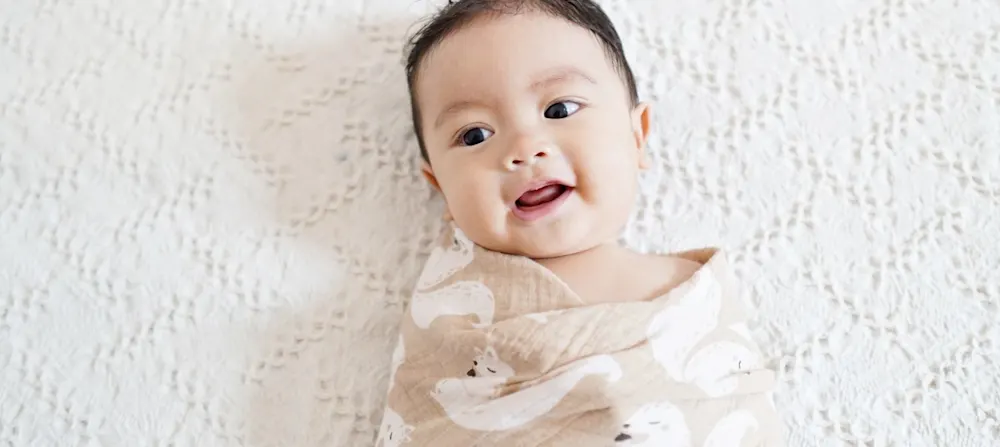
For newborns, swaddles can be a dream. They keep your baby warm and help calm that startle reflex. However, once a baby shows signs of rolling, swaddling can increase risk, since restricted arms can make it harder for a baby to reposition themselves. When your baby starts to show signs of rolling, such as rocking side to side or lifting legs and twisting the torso, opt for a hands-free option to ensure safe snoozing.
Wearable blankets
Wearable blankets, or sleep sacks, are the MVPs of safe and cozy sleep. They’re designed to stay securely on your baby, offering blanket-level warmth without the drawbacks of loose blankets. Available in different TOG ratings and styles, they’re easy to match to your baby’s room temperature, like choosing the right “cozy setting” for the night. Most wearable blankets are sleeveless (to prevent overheating), but some come with sleeves for cooler climates. There are options, too, that come with removable sleeves, so you can adapt as your little one’s mobility increases.
The neckline and armholes should fit snugly (but not tightly), and the sack should be roomy enough for kicking legs and healthy hip movement.
Wearable blankets also make a great transition once your baby outgrows swaddling. Many parents switch to a sleep sack around 2 - 3 months, or whenever their little one starts practicing rolling moves [6].
Footed sleepers
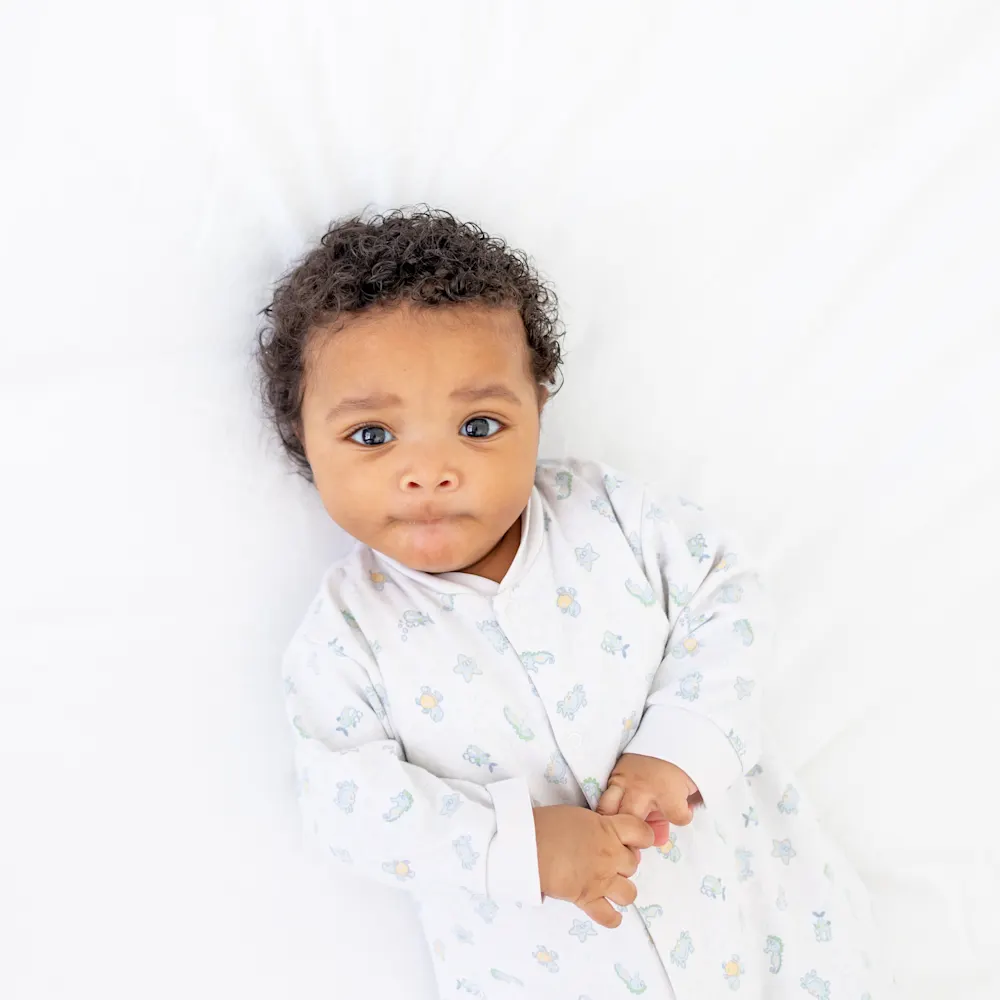
Footed sleepers -– those adorable one-piece pajamas with tiny built-in feet — are another safe option that requires zero adjusting. They keep your little one’s body temperature more consistent through the night by covering arms, legs, and feet in one cozy outfit.
Plus, there are sleepers for every season. Lightweight cotton is a great choice for warmer months. Fleece or thermal options can be on hand for cooler nights. You can pair a footed sleeper with a sleep sack for extra warmth as well.
You can also layer clothing under a footed sleeper when needed. Many families start with a lightweight onesie as a base layer and add another layer on colder nights. It’s generally best to avoid bulky or puffy layers, which can make it harder for babies to regulate their body temperature.
Always make sure your little one has room to move. Sleep sacks should be snug enough to stay in place but loose enough for kicking, stretching, and rolling. As long as the footed sleeper fits properly (not too tight in the chest, arms, or legs) your baby should be able to scoot and stretch comfortably.
Making the nursery comfortable in any season
Whether your baby sleeps in your room or another space, keeping the sleep environment relatively consistent can support their comfort. Consider small adjustments like keeping the crib away from direct drafts, arranging furniture to allow airflow, or using curtains or shades to manage sunlight.
In drier climates or winter months, some families find a cool-mist humidifier helpful, as long as it’s used safely and cleaned regularly. Tools like a room thermometer or a baby monitor with temperature readouts can offer extra context if you want it, but they aren’t required for creating a comfortable space.
Ultimately, comfort depends on many factors (your home, the season, and your heating or cooling setup), so the most important guide is observing how your baby responds rather than following strict rules.
During colder months
Many families focus on clothing and sleepwear choices rather than trying to control the room perfectly. A steady indoor temperature can help, but small fluctuations are normal. Central heating, when available, may help reduce large swings, while placing the crib away from direct heat sources like vents or radiators can prevent spots that feel too warm. Watching how your baby responds is the most reliable guide.
During warmer months
When temperatures rise, you may wonder about air circulation. Improving airflow (using a fan or air conditioning) is one option, as long as it’s not blowing directly on your little one. Some families manage the room temperature, too, by using curtains or shades to keep sunlight from overheating the space. Often, a few simple tweaks and paying attention to how your baby responds are all that’s needed.
Creating a consistent sleep environment for warmth and safety
A consistent, comfortable room temperature can support your baby’s developing circadian rhythm. Body temperature naturally follows a daily pattern that’s closely linked to sleep, for both adults and babies, a slight drop in core body temperature in the evening is associated with the release of melatonin, the hormone that helps signal the brain that it’s time for sleep [7]. This natural temperature dip typically begins in the evening. When the sleep environment stays steady and comfortable, it can support this process by making it easier for your baby’s body to regulate temperature without extra effort.
A predictable sleep environment can include:
Stable room temperature
Gentle and dim lighting
Minimal noise distractions or use of white noise
A consistent wind-down routine before bed
Share article:

Note: The content on this site is for informational purposes only and should not replace medical advice from your doctor, pediatrician, or medical professional. If you have questions or concerns, you should contact a medical professional.
6 Sources
Share article: