Do baths help babies sleep? Evidence and tips
Updated Oct 09, 2026
Up-to-date
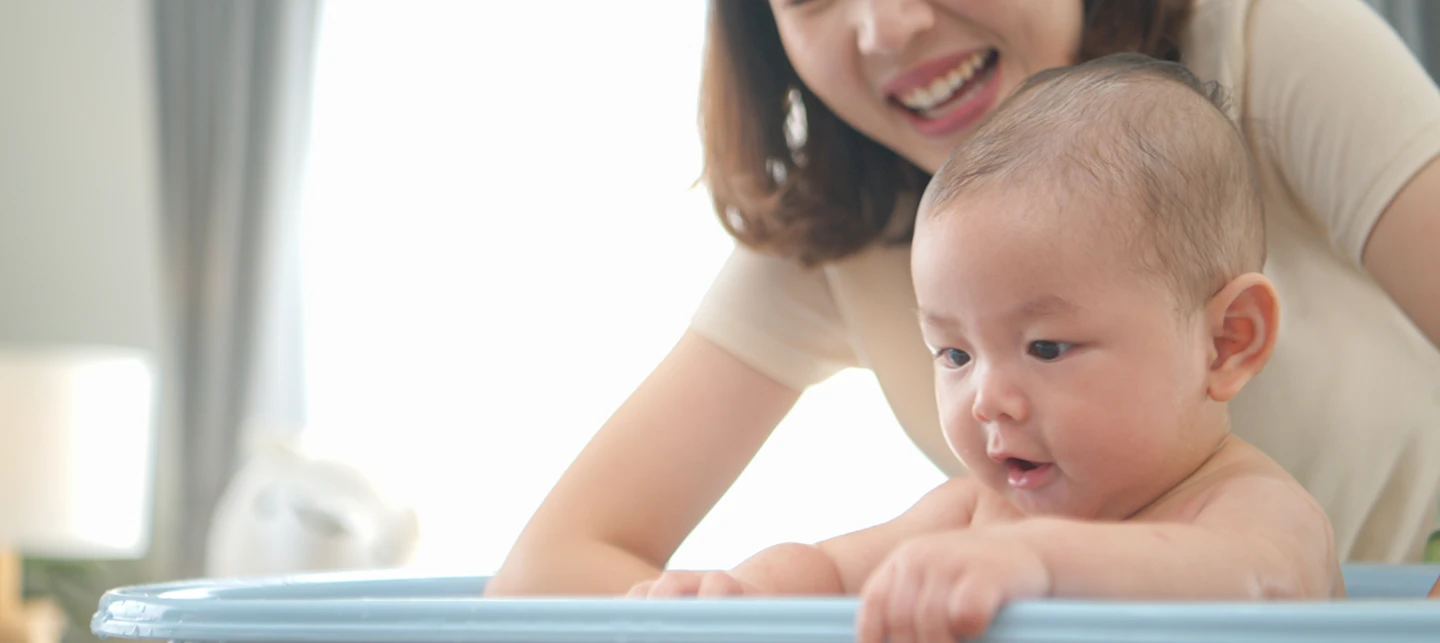


Bath time can feel like a natural way to wind down the evening: warm water, a little splashing, a cozy towel wrap. But does it actually help babies sleep? And what if a nightly bath doesn’t work for your family? We’ll walk you through what the science says, why bath time can be a meaningful part of your baby’s bedtime routine, and how to make it work — or what to do instead.
Can a bath be part of your baby’s nightly bedtime routine?
A bath can absolutely be part of your baby’s regular bedtime routine — with one caveat: Not every baby responds to baths the same way. Some find warm water calming, while others find it too stimulating — and for babies with sensitive skin, daily baths may not be the right fit either.
Where does a bath fit into your baby’s routine?
Research conducted in adults suggests the optimal window for a pre-sleep bath is 1 - 2 hours before bedtime, allowing enough time for the body’s natural cooling process to support sleep onset [1]. That said, bath time also serves other purposes — bonding, hygiene, and the simple joy of it — so the timing doesn’t have to be perfect.
The best time for a bath is whatever works best for your family. If it’s part of your evening routine, aiming to bathe early enough to complete the rest of your bedtime routine and put your baby to bed before overtiredness sets in is a good general rule.
Here is one example of how a bath can fit into your bedtime routine — order may vary based on your child’s age and what works best for your family:
Bath or quick wipe-down
Lotion or gentle massage
Pajamas
Feeding
Songs or a story with some cuddling
Do babies need a bath every day?
Not necessarily. The AAP notes that 2 - 3 baths per week during your baby’s first year may be enough [2]. Though if a daily bath works well for your family and your baby’s skin tolerates it, that’s OK. A gentle, fragrance-free baby wash is mild enough for daily bathing for most babies.
Here’s a general guide to bathtime frequency by age, starting with baby's first baths as a newborn:
Age | Recommended frequency | What to consider |
Newborns (0 - 3 months) | Aim for 1 - 2 baths per week | Before your baby’s umbilical cord stump falls off, opt for sponge baths rather than submerging their body in water [2]. |
Infants (3 - 6 months) | 2 - 3 gentle baths per week | Babies this age don’t usually get dirty enough to need more frequent baths. |
Older babies (6 - 12 months) | 2 - 3 gentle baths per week | Increase as needed once solid food exploration and crawling begin — it can get messy! |
Toddlers (1 - 2 years) | Daily is fine, adjust as needed | Most toddlers can handle daily baths, especially if it’s become a reliable part of their wind-down routine. |
How bath time can support your baby’s bedtime routine
When bath time fits naturally into your evening, it can bring a few things together at once:
A consistent sensory cue that signals sleep is coming
A moment of calm connection at the end of a busy day
A natural transition from the stimulation of the day to something quieter and slower
The research supporting these benefits is largely about consistent bedtime routines broadly — not baths specifically — so any calming, predictable wind-down sequence can offer the same things. For families who enjoy it, a bath can be a lovely way to bring them all together.
The science behind baths and your baby’s sleep
A warm soak can be something to look forward to — but there’s more going on under the surface than what meets the eye. Warm water has real effects on the body, and a consistent bath routine may have psychological ones, too. Here’s what the science says:
Temperature regulation
Much of what we know about how warm water baths affect sleep comes from adult research — but the underlying mechanisms are worth understanding. When the body soaks in warm water, blood flow increases toward the skin’s surface (particularly the hands and feet), triggering a natural cooling effect once you’re out of the bath. As core temperature falls, the brain receives one of its most reliable signals that sleep is near, and melatonin rises as part of that same process [3].
Research suggests timing the bath about 1 - 2 hours before bedtime gives the body enough time to complete that cooling cycle.
Stress hormones
Cortisol — the body’s primary stress hormone — naturally eases as bedtime approaches, and warm water may help support that process [4]. How bath time goes matters, too: sensitive, calm caregiving during bath time has been associated with better stress regulation in infants, meaning a connected, unhurried experience may do more for your baby than a rushed one [4].
On nights when time is short, skipping the bath in favor of a slower wind-down (a gentle wipe-down, a quiet song, or a few minutes of calm connection) may actually serve your baby better.
Sensory experience
The warmth of the water, the scent of a mild soap, the sound of the faucet, the feeling of a soft towel — over time, the brain begins to associate these sensory details with what comes next. That association can make the transition to sleep feel more automatic, because the nervous system starts to anticipate sleep before it even arrives.
The bath doesn't have to happen every night for these cues to take hold — and on nights you skip it, you can recreate a similar sensory experience with a warm washcloth wipe-down, a gentle lotion massage, or the same dim lighting. The more consistently those sensory elements appear together in your wind-down sequence, the stronger that sleep signal may become.
What if bath time winds my baby up?
If bath time tends to energize your baby before bed, try moving it a little earlier in the evening, or skipping it altogether. An earlier bath gives any stimulation time to settle before bedtime and may make it easier to transition to sleep before overtiredness sets in — but if the timing doesn’t work for your family, that’s completely fine too.
A bath doesn’t have to be a part of your bedtime routine at all. A quick wipe-down if needed, a fresh diaper and pajamas, a feeding, a story or a lullaby can be just as effective — consistency in your overall bedtime routine matters more than any one step.
Does a bath help an overtired or fussy baby?
A warm bath tends to work best as prevention rather than rescue. If it’s not too close to bedtime, a bath can be a great way to help ease your baby toward sleep. If bedtime is approaching or your baby is already showing sleepy cues, skip the bath and move through the rest of your routine calmly and efficiently: dim lights, a feeding, a song. Getting to sleep without delay will do more for an overtired baby than adding another step to the routine.
4 tips for including baths in a consistent bedtime routine
A bath can be a wonderful wind-down ritual that you and your baby both look forward to every night. Here are 4 tips for incorporating bathtime into your bedtime routine:
1. Create a calm, sensory-friendly environment
Creating the right environment before the bath even starts can make a difference:
Have everything you need — towel, diaper, pajamas — ready before you start
Dim the lights, or use a nightlight rather than overhead lighting
Keep the room warm and draft free
Keep your voice calm and your movements unhurried
Opt for fragrance-free or mildly scented baby wash over heavily scented products
2. Time the bath before their final feeding
For many families, bath works best before the final feeding rather than after, with a calm feeding as the next step in the wind-down routine.
3. Keep the water warm — but not hot
The ideal bath water temperature for babies sits at around 100°F (38°C) — warm and cozy, but not too hot for your baby’s sensitive skin [5]. The AAP recommends keeping faucet temperature no higher than 120°F to prevent burns [2].
Once you’ve filled the tub or sink with 2 - 3 inches of water, test the temperature with a bath thermometer or simply use your inner wrist or elbow. Avoid using only your fingers, which can typically tolerate higher temperatures and may not give you an accurate read of how the water will feel on your baby’s skin [5]. Remember, if it feels hot to you, it’s likely too hot for your baby. And always stay within arm’s reach — babies should never be left unsupervised in the bath, even for just a moment.
4. Keep the calm going after the bath
The moments after the bath matter as much as the bath itself. Keep the calm going by moving directly to a dim, quiet room and continuing with the rest of your wind-down steps — lotion, pajamas, a feeding, story time, then into your baby’s sleep space. Bright lights, screens, or a sudden shift in energy can quickly undo the wind-down, so keep the environment as quiet and settled as the bath itself
Routines for non-bath nights
If bath time is part of your bedtime routine but doesn’t happen every night, continuing with the rest of your usual sequence is enough. If your baby needs a little freshening up, a warm washcloth wipe-down — face, neck folds, hands, and diaper area — can do the trick and may help maintain that familiar pre-sleep feeling, too.
Share article:

Note: The content on this site is for informational purposes only and should not replace medical advice from your doctor, pediatrician, or medical professional. If you have questions or concerns, you should contact a medical professional.
5 Sources
Share article: