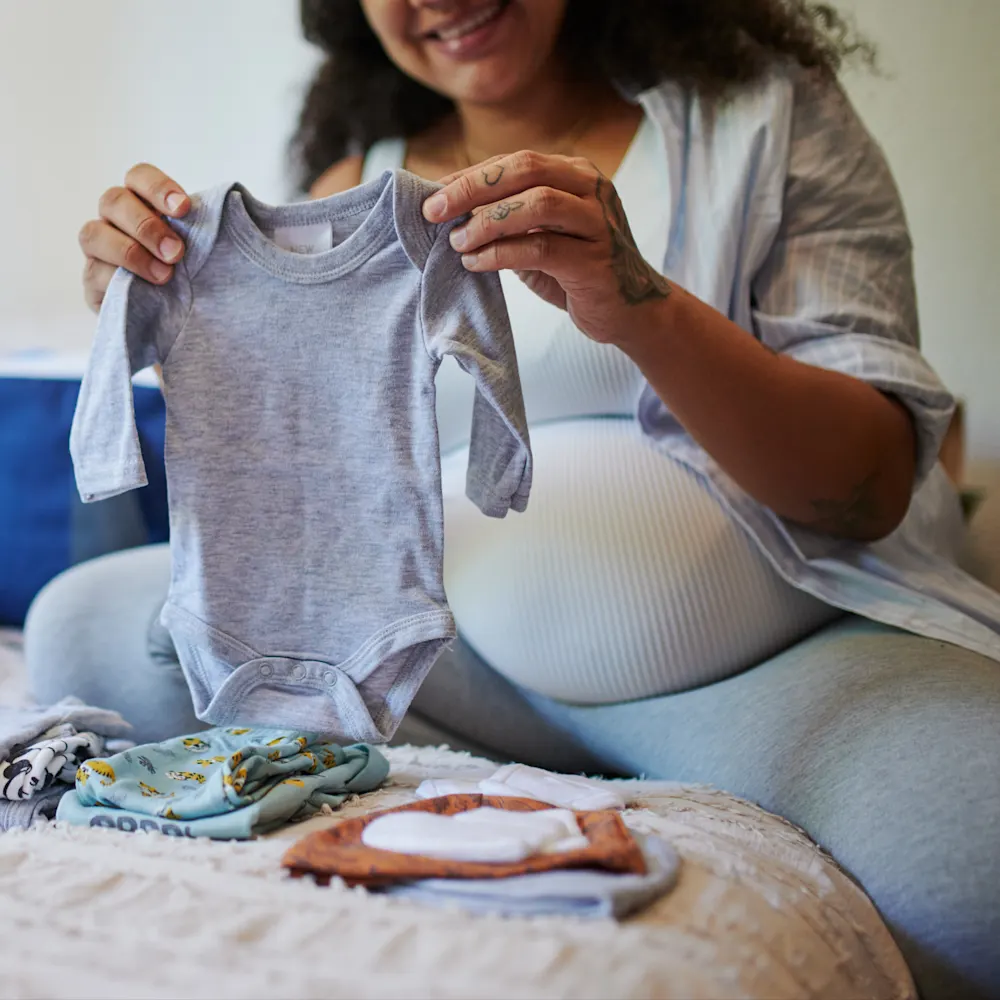
Do newborns have to wear hats?
Updated Sep 24, 2026



From the tiny knit beanies babies wear at the hospital to those irresistibly cute baby-sized hats with bear ears, newborn headwear gets a lot of attention early on. It’s common for new parents to wonder whether babies actually need hats, how long they should wear them, and why it’s not safe to keep hats on during sleep.
Ahead, we’ll break down the latest guidance on newborn hats so you can feel confident about when to use them.
Why babies wear hats right after birth
Not only are baby hats adorable, but there’s a practical reason why newborns often wear hats right after birth. Newborns lose heat more easily than adults [1], especially right after leaving the warm, steady environment of the womb. A soft hat is a simple, common way to help reduce heat loss during those first hours while a baby’s body adjusts. Hats are often used alongside other ways to keep your baby cozy, like dressing them appropriately and skin-to-skin contact [2].
How long do babies actually need to wear hats?
For babies born early or with specific health needs, your pediatrician or medical provider may recommend specific temperature-management steps that may include wearing a hat. Without special circumstances, hats tend to be most useful in the first hours or days after birth. After that, they’re usually less of a default and more of a situational choice based on comfort, environment, and yes, sometimes sartorial style!
Here’s how hat use typically shows up in everyday life with a newborn:
Situation | Is a hat commonly needed? | What to know |
Immediately after birth | Yes | Hats are often worn in the first hours after birth to help reduce heat loss |
At home indoors | No | Most babies are able to maintain their own temperature in a standard indoor environment without an extra layer on their head |
Outdoors in cool weather | Yes | Hats can help protect against cold or windy conditions |
Indoors during sleep | No | For safety reasons, hats should never be worn during sleep [3] |
Should newborns sleep with hats on?
For sleep, the AAP recommends keeping babies’ heads uncovered [3]. This is because a hat can slip down and cover a baby’s face, or cause them to overheat. To help your baby stay comfortable without a hat, aim for a cool room temperature whenever possible, and use layers like a breathable sleeper or sleep sack.
Once a healthy, full-term baby is stable and feeding well, hats usually become optional [4]. Exceptions may apply for babies in the NICU or those with specific medical needs, based on guidance from your doctor.
When hats make sense — and when you can skip them
When it comes to hats after those first days after birth, it’s helpful to think about context and preference. In many indoor settings, your baby likely won't need a hat to stay comfortable. You can usually skip the hat unless they are fresh out of the bath or heading into the cold.
To follow safe sleep guidelines and help your baby regulate their temperature, it’s best to keep their head uncovered while they sleep. This helps prevent overheating, which is an important part of a safe sleep environment.
How to tell if your newborn is too warm or too cool
Keeping your little one comfortable doesn’t have to turn into a temperature science experiment. Most of the time, a steady room temperature, seasonally appropriate layers, and a quick check of your baby’s cues are enough.
You don’t need to monitor the thermostat obsessively or set it to a precise degree every night. Babies are surprisingly adaptable, and small variations in room temperature are usually OK. When in doubt, a simple feel of your baby’s chest, back, or neck can typically tell you more than any number on the wall.
Adjusting layers
In most cases, adding or removing a light layer of clothing (like a onesie or sleep sack) is all that’s needed. A helpful tip is to start with one more light layer than you’re wearing, then use your judgment based on how your baby’s skin feels [5]. From there, you can check in on them periodically if you’re concerned. As you get to know your baby, you’ll learn their preferences and what works for them.
Checking your baby’s body temperature
The best way to check if your baby is at a comfortable temperature is to feel their chest, back, or the back of their neck. Hands and feet often feel cooler than the rest of the body, so they don’t always give the full picture on their own.
Signs your baby is too warm or too cool
If you’re unsure, your baby’s body and behavior can offer helpful clues.
Signs your baby may be too warm include:
Sweaty or clammy skin, especially around the neck or hairline
Flushed skin or skin that feels hot to the touch
Restlessness or fussiness during sleep (though newborn sleep is unpredictable in general)
Signs your baby may be too cool include:
A chest, back, or neck that feels cool
Restlessness or waking shortly after being put down (though frequent wake-ups and fussiness are common in the newborn phase)
Pale skin tone
Temperature and sleep
If your baby seems to be uncomfortable and waking more often than usual, one thing to check for is basic comfort — like room temperature and clothing layers. That said, frequent wake-ups are also very normal in newborns. Temperature is just one piece of the puzzle.
When it’s worth checking in with your pediatrician
While it’s always OK to reach out for peace of mind, contact your doctor immediately if your baby doesn’t seem able to get comfortable, even after you’ve adjusted clothing or room temperature, if they seem unusually lethargic, or if they are having difficulty feeding.
If your baby ever appears bluish around the lips or face, is unusually lethargic, or is difficult to wake, seek medical care right away. These signs aren’t typical temperature issues and should be evaluated promptly.
Your pediatrician is a partner in your baby’s care. Don’t hesitate to reach out if you have questions about your baby’s specific environment or health needs — your intuition is a valuable tool.
Share article:

Note: The content on this site is for informational purposes only and should not replace medical advice from your doctor, pediatrician, or medical professional. If you have questions or concerns, you should contact a medical professional.
5 Sources
Share article: