Sleep · 6 min read
4 month sleep regression: Why it happens and what you can do about it
The biological reason why sleep changes around 3 - 4 months, what it typically looks like, and concrete steps to help your baby - and you - get more rest.
A month of giggles, rolling practice, and sleep changes. Everything you need to know, with expert guidance and tools to make it feel a little lighter.
This month can bring first chuckles, new social awareness, and shifting sleep. Use the buttons below to jump to each section.
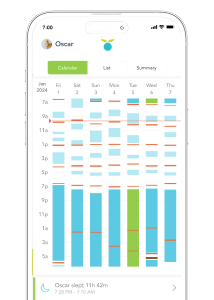
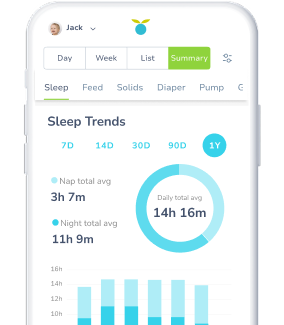
We recommend that babies get around 14.5 hours of total sleep over 24 hours, with 3 - 4 naps per day. If sleep feels more disrupted than expected right now, the "4-month sleep regression" may be at play — it's a normal part of how sleep matures at this age.
Read the full guide →Struggling with nap math? SweetSpot® uses your baby's logged sleep patterns to predict when your baby will next be tired, but not overtired.
Around 4 months, many babies settle into a more predictable rhythm of eating and sleeping. Here's a sample of what a day at this age can look like — if yours looks different, that's normal.
Your 4 month old is likely becoming more interactive every day. Watch for increased eye contact, social smiling, and early cooing. Aim for 90 minutes of tummy time per day, spread throughout waking hours. Head control often improves quickly, and many babies begin to roll from tummy to back this month.
Read the full guide →Have questions about your baby's development? With a Huckleberry Premium membership, Berry — Huckleberry's expert-vetted, in-app AI — is available 24/7 to help you think through what's typical at 4 months and what's coming next.
Every baby develops on their own timeline, but here are the milestones most 4 month olds hit. Use it as a gentle guide, not a checklist to stress over.
At 4 months, breast milk and/or formula remain your baby's only nutrition. The AAP currently recommends waiting to introduce solids until your child shows signs of readiness, typically around 6 months. Continue to feed on demand and watch for hunger and fullness cues.
Read the full guide →Track feeds side-by-side with sleep in the Feeding Log to spot patterns — like whether a longer afternoon feed leads to a longer final nap.
Your 4 month old is still getting all their nutrition from formula and/or breast milk. Here's what feeding typically looks like this month.
Feeding and sleep shift by the day, growth spurts hit, and first smiles, coos, and rolls can show up before you know it. Over 6 million families use Huckleberry to track it all and get guidance made for their baby.
Try Huckleberry Premium