Potential crawling, clapping, and changing sleep. Month 8 can be full of more firsts.
Month 8 often brings the start of a 2-nap routine, new motor skills, and a few sleep surprises. Use the buttons below to jump to each section.
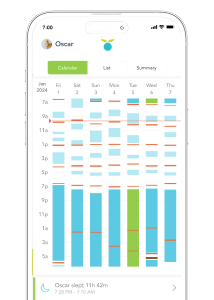
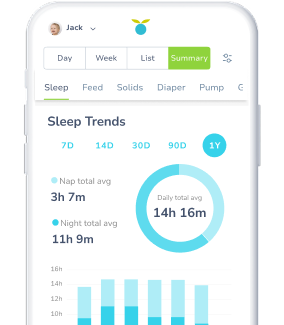
At 8 months, most babies do well with 2 - 3 naps and about 14 hours of total sleep: 11 - 12 hours at night and 2 - 3 hours across daytime naps. Wake windows typically run 2.25 - 3.5 hours. However, milestones like crawling can temporarily disrupt sleep, even for babies who had been sleeping well.
Read the full guide →Between the 3-to-2 nap transition, separation anxiety, and new motor skills, 8 months can be one of the bumpier sleep months. If you're struggling to find a rhythm, a Huckleberry sleep plan gives you a personalized, step-by-step approach built around what's actually going on with your baby right now.
Many 8 month olds have settled into a 2-nap schedule. Here's a sample of what a typical day can look like, though your baby's timing will shift based on their wake time and wake windows.
Eight months often brings rapid motor growth. Most babies can now sit independently, many are crawling or pulling to stand, and the pincer grasp is developing. Object permanence is emerging, meaning your baby now understands things exist even when they can't see them, which often intensifies separation anxiety.
Read the full guide →Have questions about your baby's development? With a Huckleberry Premium membership, Berry — Huckleberry's expert-vetted, in-app AI — is available 24/7 to help you think through what's typical at 8 months and what's coming next.
Every baby develops on their own timeline, but here are the milestones most 8 month olds hit. Use it as a gentle guide, not a checklist to stress over.
At 8 months, breast milk or formula remains your baby's primary nutrition source. Continue feeding on demand, often around 4 - 6 milk feeds per day. Aim for 2 solid meals per day, with a growing variety of textures and flavors.
Read the full guide →Track the foods you've introduced in the Huckleberry app's Feeding Log — especially useful for allergens and building a record of what baby has tried. It often takes many exposures for baby to "like" a food.
Breast milk or formula will remain your little one's primary nutrition source at 8 months, up until closer to their 1st birthday. Two solid meals a day are typical now, with a widening variety of textures and flavors.
If you introduced common allergens around 6 months, continue serving them regularly. Regular exposure is key to building tolerance.