Sleep · 5 min read
Newborn won't sleep unless being held: What to do?
Why it's normal for newborns to sleep best in your arms and ways to start laying sleep foundations at a pace that's right for your baby and gives you a break when you need one.
These first weeks are often about big love and small sleep stretches. Here's what to expect, with expert guidance and tools to help you find your footing.

The fourth trimester is full of frequent feeds, short wake windows, and soaking up all the snuggles. Use the buttons below to jump to each section.
Newborn sleep is famously unpredictable, which is developmentally normal. Most newborns sleep 14 - 17 hours across 24 hours, in short stretches day and night. Your baby's internal clock isn't fully online yet, which is why more predictable schedules don't typically emerge until closer to 3 - 4 months. For now, it's about watching for sleepy cues and responding to your baby's needs.
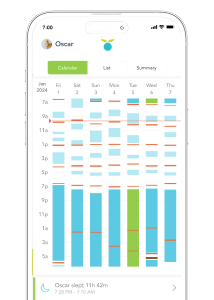
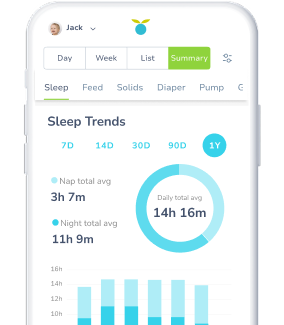
Read the full guide →Newborn sleep is unpredictable, but logging each stretch helps you track wake windows so you know when to start watching for sleepy cues. It's also the easiest way to spot the first hints of day/night confusion starting to sort itself out. Track every sleep in the free Huckleberry app to see awake time and totals at a glance.
Newborns don't follow a clock yet. Rather than a set schedule, most days and nights in the early weeks are built around the same basic pattern, without predictable timing.
Tummy time is the foundation for almost every motor milestone ahead, and it starts the day you bring your baby home. For newborns, that's just 1 - 2 minutes at a time, a few times a day (chest-to-chest counts). Here's how much per age, the positions that work for tiny necks, and tips for making it work even if your baby isn't a fan at first.
Read the full guide →Have questions about your newborn's development? With a Huckleberry Premium membership, Berry — Huckleberry's expert-vetted, in-app AI — is available 24/7 to help you think through what's typical in the newborn weeks and what's coming next.
Every baby develops on their own timeline, but here are the milestones most newborns hit. Use it as a gentle guide, not a checklist to stress over.
It's expected that newborns will eat around the clock — their tummies are tiny! Watch for hunger cues like rooting, hand-to-mouth, and fussiness, and feed on cue rather than by the clock.
Read the full guide →Log each feed in the Feeding Log as it happens. In the early weeks, logging can give you peace of mind and confirm your baby is eating enough times per day. Patterns and predictability come later.
Breast milk or formula is your newborn's only nutrition. Amounts can vary a lot week to week, so here's a typical range for the first 8 weeks.
Feeding and sleep shift by the day, growth spurts hit, and first smiles, coos, and rolls can show up before you know it. Over 6 million families use Huckleberry to track it all and get guidance made for their baby.
Try Huckleberry Premium