Still mostly sleep and snuggles, with the first subtle hints that your baby is settling into the outside world.
Month 1 can bring longer awake moments, new sounds, and slightly longer stretches between feeds. Use the buttons below to jump to each section.
Sleep is still pretty disorganized at 4 weeks, and that's developmentally normal. Most 1 month olds continue to sleep in short stretches day and night. Wake windows tend to run 30 to 90 minutes. Day/night confusion is still common, and tends to improve by 8 weeks.
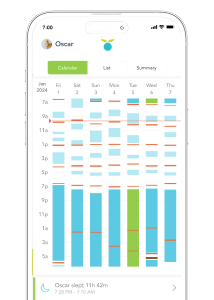
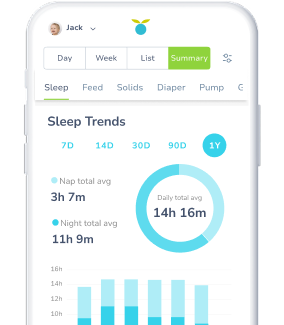
Read the full guide →Logging each stretch helps you track wake windows so you know when to start watching for sleepy cues (yawning, faraway stare, fussing) before your baby tips into overtired.
One month olds still don't follow a set clock schedule. The cycle below repeats day and night, with slightly longer wake windows by the end of the month.
At 4 weeks, your baby is working hard at things that look small from the outside: brief head lifts during tummy time, focusing 8 - 12 inches away, and starting to recognize your voice. Most milestones at this stage are about reflexes and orientation, not big motor moves. Here's what to expect, what's typical, and when to ask your pediatrician.
Read the full guide →Have questions about your baby's development? With a Huckleberry Premium membership, Berry — Huckleberry's expert-vetted, in-app AI — is available 24/7 to help you think through what's typical at 1 month and what's coming next.
Every baby develops on their own timeline, but here are the milestones most 1 month olds hit. Use it as a gentle guide, not a checklist to stress over.
Breast milk or formula is your baby's only nutrition at 1 to 2 months. Most babies feed 8 - 12 times across 24 hours, every 2 - 3 hours for breastfed and every 3 - 4 hours for formula-fed. Watch hunger cues and feed on demand rather than by a strict schedule.
Read the full guide →Track each feed so you can answer the inevitable "when did they last eat?" question without doing math at 3 AM. You can also set feed reminders in the app to nudge you when it's time for the next one.
At 1 month, feeds still happen around the clock. Your baby is likely taking in more per feed than they did as a newborn, though this can shift from one feed to the next. Here's what's typical.