Rolling, raspberries, and reaching for objects with both hands. Playtime may start to feel like a real back-and-forth.
Month 5 can bring sitting with support, rolling, and growing curiosity about everything around them. Use the buttons below to jump to each section.
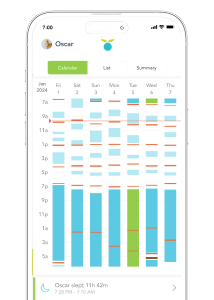
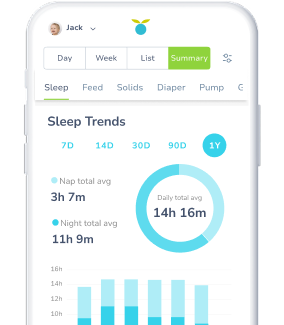
At 5 months, we recommend babies get around 14.5 hours across 24 hours, with 11 - 12 hours at night and 2.5 - 3.5 hours of daytime sleep across 3 - 4 naps. The first two naps usually start to lengthen this month, and many babies transition from 4 naps to 3.
Read the full guide →At this age, sleep can feel unpredictable again. With a Huckleberry Premium membership, you can get a Sleep Plan with personalized, step-by-step guidance built around your baby's patterns and your parenting preferences.
Here's a sample 3-nap day for a baby ready for longer wake windows. Yours will vary, especially if your baby is still taking 4 naps. (Most babies transition to 3 naps by 5 - 6 months.)
Rolling is the headline this month. Most babies start rolling back-to-tummy or tummy-to-back at 5 months, and many can roll both directions by 6 months. Two-handed reaching, sitting with support, and the first real babbling ("baba," "gaga") show up.
Read the full guide →Have questions about your baby's development? With a Huckleberry Premium membership, Berry — Huckleberry's expert-vetted, in-app AI — is available 24/7 to help you think through what's typical at 5 months and what's coming next.
Every baby develops on their own timeline, but here are the milestones most 5 month olds hit. Use it as a gentle guide, not a checklist to stress over.
At 5 months, babies continue to get most of their nutrition through breast milk or formula. While you may be thinking about solids, the AAP recommends waiting for signs of readiness (like head control, sitting with support, interest in your food) before introducing table foods. This usually happens around 6 months.
Read the full guide →Have feeding questions right now? With a Huckleberry Premium membership, Berry — Huckleberry's expert-vetted, in-app AI — is available 24/7 to help you think through what's normal at this age and what's coming next.
Babies at this age still get the majority of their nutrition through breast milk or formula. Solid foods are likely right around the corner.