Sleep · 5 min read
3 month sleep regression: Myth or real?
Is the 3-month sleep regression real? Here's what the research says, what disrupted sleep at this age typically looks like, and how to navigate it if it hits.
12 weeks of progress: conversations in coos, tummy time push-ups, and a daily rhythm starts to take shape. Here's what to expect.

This month can bring hand discovery, the start of a more predictable daily flow, and social smiling. Use the buttons below to jump to each section.
At 3 months, your baby's sleep may settle into a recognizable flow. Sleep architecture is also maturing at this age, which can mean more noticeable wake-ups as sleep cycles organize. Most babies will sleep about 14 - 17 hours across 24 hours, with at least 10 hours at night and 4 - 5 daytime naps. Wake windows tend to run 60 - 120 minutes.
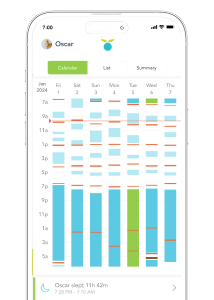
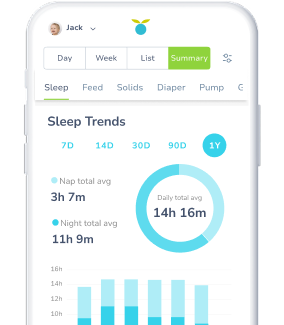
Read the full guide →At 3 months, your baby may be settling into a more predictable rhythm. Logging each sleep stretch helps you track wake windows so you know when to start watching for sleepy cues — before your baby tips into overtired.
Here's a sample day at 3 months. If yours looks different, that's normal. Naps especially tend to vary baby to baby and day to day.
At 12 weeks, babies are becoming more active. They may lift their head during tummy time, push their chest off the floor with their arms, open and close hands, and swipe at dangling toys. Coos and babbling sounds appear, eye contact deepens, and you'll likely catch them tracking you across a room.
Read the full guide →Have questions about your baby's development? With a Huckleberry Premium membership, Berry — Huckleberry's expert-vetted, in-app AI — is available 24/7 to help you think through what's typical at 3 months and what's coming next.
Every baby develops on their own timeline, but here are the milestones most 3 month olds hit. Use it as a gentle guide, not a checklist to stress over.
Breast milk or formula remains your baby's only nutrition at 3 months. Most babies feed every 3 - 4 hours during the day and may go longer at night. Watch hunger cues and continue to feed on demand.
Read the full guide →Logging feeds in the Huckleberry app gives you a clearer picture of how your baby is eating, day and night. You can also set feed reminders in the app to nudge you when it's time for the next one.
Breast milk or formula is still your baby's only nutrition. Feeds may space out as your baby's belly grows.
Some feeds will be longer, some shorter. That's normal and usually not a sign that something's off.
Feeding and sleep shift by the day, growth spurts hit, and first smiles, coos, and rolls can show up before you know it. Over 6 million families use Huckleberry to track it all and get guidance made for their baby.
Try Huckleberry Premium