Sleep · 5 min read
The witching hour: What it is, why it happens, and how to manage
Intense fussiness around the same time every day, usually late afternoon or evening. Why it happens, when it peaks, and when it usually resolves.
Social smiles, first coos, and a baby starting to notice everything. Here's what to expect, with expert guidance and tools to make it a little lighter.

This month can bring stronger head control, longer wake windows, and growing eye contact. Use the buttons below to jump to each section.
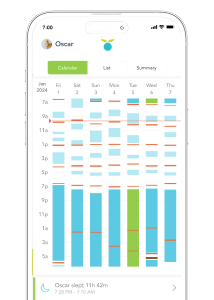
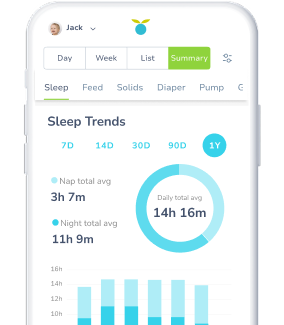
Most 2 month olds sleep around 14 - 17 hours across 24 hours, with about 5 - 6 hours of that during the day over 4 - 5 naps. Naps are still unpredictable, so plan around sleepy cues and wake windows rather than a set time on the clock.
Read the full guide →Struggling with nap math? SweetSpot® uses your baby's logged sleep patterns to predict when your baby will next be tired, but not overtired.
Two month olds still don't run on a set clock schedule, but day may start to look different from night. Here's the general pattern most 2 month olds move through.
Month 2 is when your baby's personality starts peeking through. Think first smiles, sustained eye contact, and real reactions to your voice.
Read the full guide →Have questions about your baby's development? With a Huckleberry Premium membership, Berry — Huckleberry's expert-vetted, in-app AI — is available 24/7 to help you think through what's typical at 2 months and what's coming next.
Every baby develops on their own timeline, but here are the milestones most 2 month olds hit. Use it as a gentle guide, not a checklist to stress over.
Breast milk or formula is your baby's only nutrition at 2 months. Most babies feed every 3 - 4 hours, taking 2 - 4 ounces per feeding (breastfed babies may feed more often). A growth spurt around 8 - 12 weeks may bring a short stretch of cluster feeding. Watch hunger cues and feed on demand.
Read the full guide →Cluster feeds can hit hard around week 8 or 12. Logging each feed in the Feeding Log helps you spot a growth spurt early rather than wondering why suddenly every feed is on top of the last one.
Breast milk or formula is still your baby's only nutrition. Feeds are settling into a slightly wider interval as your baby's belly grows.
Cluster feeding (lots of small feeds in a row) is normal at this stage, especially in the evenings.
Feeding and sleep shift by the day, growth spurts hit, and first smiles, coos, and rolls can show up before you know it. Over 6 million families use Huckleberry to track it all and get guidance made for their baby.
Try Huckleberry Premium