Practicing first steps, big opinions, and figuring out 'no.'
This month is all about exploring new independence, along with evolving sleep and feeding rhythms. Use the buttons below to jump to each section.
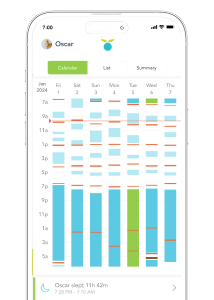
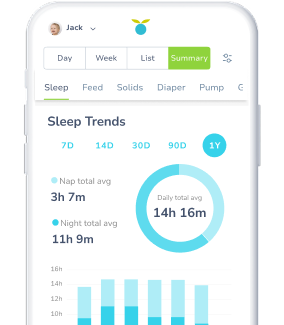
At 13 months, many toddlers do well with around 13.25 hours of total sleep: 11 - 12 hours at night and 2 - 3 hours during the day across 2 naps. Wake windows are typically 3.25 - 4 hours, with each nap running about 1 - 2 hours. However, skipped naps are common at this age as some children begin to outgrow their 2-nap schedule. Most aren't ready to fully drop to one nap just yet.
Read the full guide →Nap resistance and skipped naps are some of the most common sleep struggles at 13 months. With a Huckleberry Premium membership, you can get a personalized Sleep Plan built for where your toddler is now.
At 13 months, most toddlers are still on a 2-nap schedule, though nap resistance is common as wake windows lengthen. Here's a sample day based on a 6:30 AM wake time. Your child's timing will vary as their schedule evolves, especially as they transition to 1 daily nap.
At 13 months, some toddlers take their first independent steps, though the walking window runs all the way to 18 months. Most say one or two words beyond caregiver names (e.g. "mama") and are beginning to mimic words and gestures actively. Toddlers at this age are also starting to show strong preferences and opinions. Have you heard "NO!" a lot lately?
Read the full guide →Have questions about your toddler's development? With a Huckleberry Premium membership, Berry, our AI chat, is available 24/7 to help you think through what's typical at 13 months and what's coming next.
Every baby develops on their own timeline, but here are the milestones most 13 month olds hit. Use it as a gentle guide, not a checklist to stress over.
At 13 months, toddlers rely on solid foods as their primary nutrition source, eating around three meals and two snacks per day. Whole cow's milk (about 16 oz daily) can support growth alongside a varied diet of family foods. Appetite can be unpredictable at this age, so following hunger and fullness cues is more useful than tracking exact portions.
Read the full guide →Toddler eating patterns can be all over the map at 13 months. Tracking meals and snacks in the Huckleberry app's Feeding Log can help you keep tabs on the diversity of food your toddler is eating, so you have a full picture of their nutrition across the week.
At 13 months, solid foods are your child's primary nutrition source. Toddlers typically eat three meals and two snacks a day, with whole cow's milk (or milk alternative) rounding out their daily intake. Appetite will vary meal to meal, and that's expected.
At 13 months, most toddlers do best with soft finger foods they can pick up themselves. Utensil practice is on the horizon, but it'll be messy and imprecise at this stage. Let them lead and focus on exposure rather than on how much they eat.