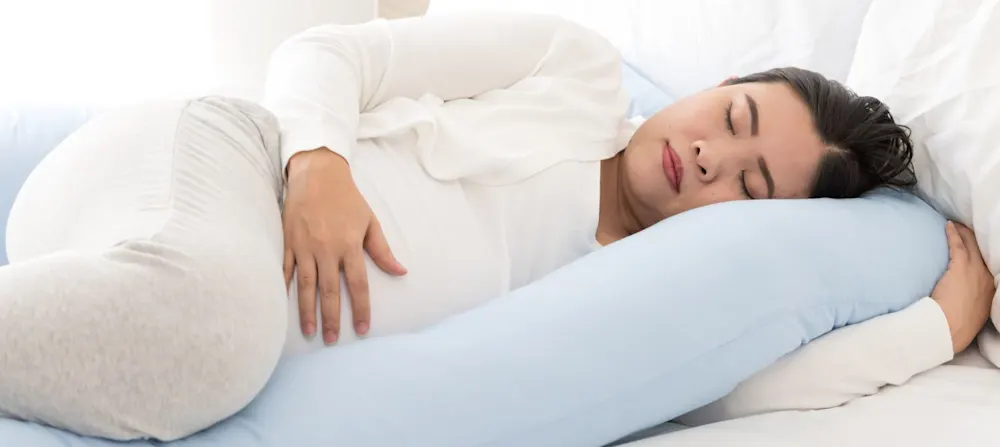
How to sleep with a pregnancy pillow? 4 best sleeping positions
Updated Sep 03, 2026



Sleep can often become harder to manage as pregnancy progresses. A growing belly puts new strain on your lower back and hips, making it tough to get comfortable or roll over without feeling like one of those flailing air dancers at a car dealership [2]. Throw in heartburn that flares when you lie down, more frequent trips to the bathroom, and the occasional leg cramp, and a full night’s rest can feel out of reach.
Better positioning can help ease a lot of those aches — and that’s where a pregnancy pillow comes in handy. Here, we’ll look at the different types of pregnancy pillows and how to lie on one comfortably so you can rest a little easier.
What is a pregnancy pillow and what are the types?
Pregnancy pillows are body support pillows that allow for optimal positioning to improve comfort, thereby improving sleep. Pregnancy pillows can come in handy, as they are known to relieve common aches and pains associated with pregnancy, especially low back, and hip pain [1].
There are several varieties of pregnancy pillows, but the 3 most popular are:
Type | Pros | Cons | Best for |
C-shaped | Versatile: supports your head, back, and knees, and flips to support your front or back | Supports one side at a time, so you reposition it when you turn over | Targeted back or belly support with some flexibility |
U-shaped | Cradles both sides and your head at once, so no repositioning when you roll over | Bulky and takes up a lot of bed space | Full-body support and frequent position changes |
Wedge | Compact, budget-friendly, and easy to travel with | Only supports one small area at a time | Targeted support under the belly or behind the back, on a budget |
Body pillow | Simple and flexible, less bulky than a U, and doubles as a regular body pillow | Supports just one side, with no head or back wrap | Side support in a smaller bed |
Regardless of the type of pillow you choose, the positioning of the pillow to promote neutral spinal alignment (the natural position of the spine when all three curves: cervical, thoracic, and lumbar are aligned with each other) is what is important.
This allows the muscles surrounding the pelvis and hips to relax. Whether you’re using a regular standard pillow, a U-shaped pillow, or a rolled-up towel, the recommendation is that it be placed between the thighs and knees, supporting those achy muscles and joints from the hips to the knees.
When should you start sleeping with a pregnancy pillow?
It is not absolutely necessary to sleep with a pregnancy pillow at all. However, most pregnant women find that they have increased difficulty finding a comfortable sleeping position or are unable to roll over without a struggle around 20 weeks. This may be a good time to try a supportive maternity pillow rather than trying to create a comfortable sleep space using all the throw pillows stolen from your living room.
4 best sleeping positions with pregnancy pillows
Here are the most comfortable ways to sleep using different pregnancy pillows:
Using C-shaped pregnancy pillow supports the back

By placing the C-shaped pregnancy pillow behind your back, laying your head on the part that reaches around, and placing the end between your knees, will give optimal back support.
Using C-shaped pregnancy pillow supports the front

Place the C-shaped pillow in front of you as you lay down on your side and placing the end between your knees will give you front support.
Using U-shaped pregnancy pillow to sleep
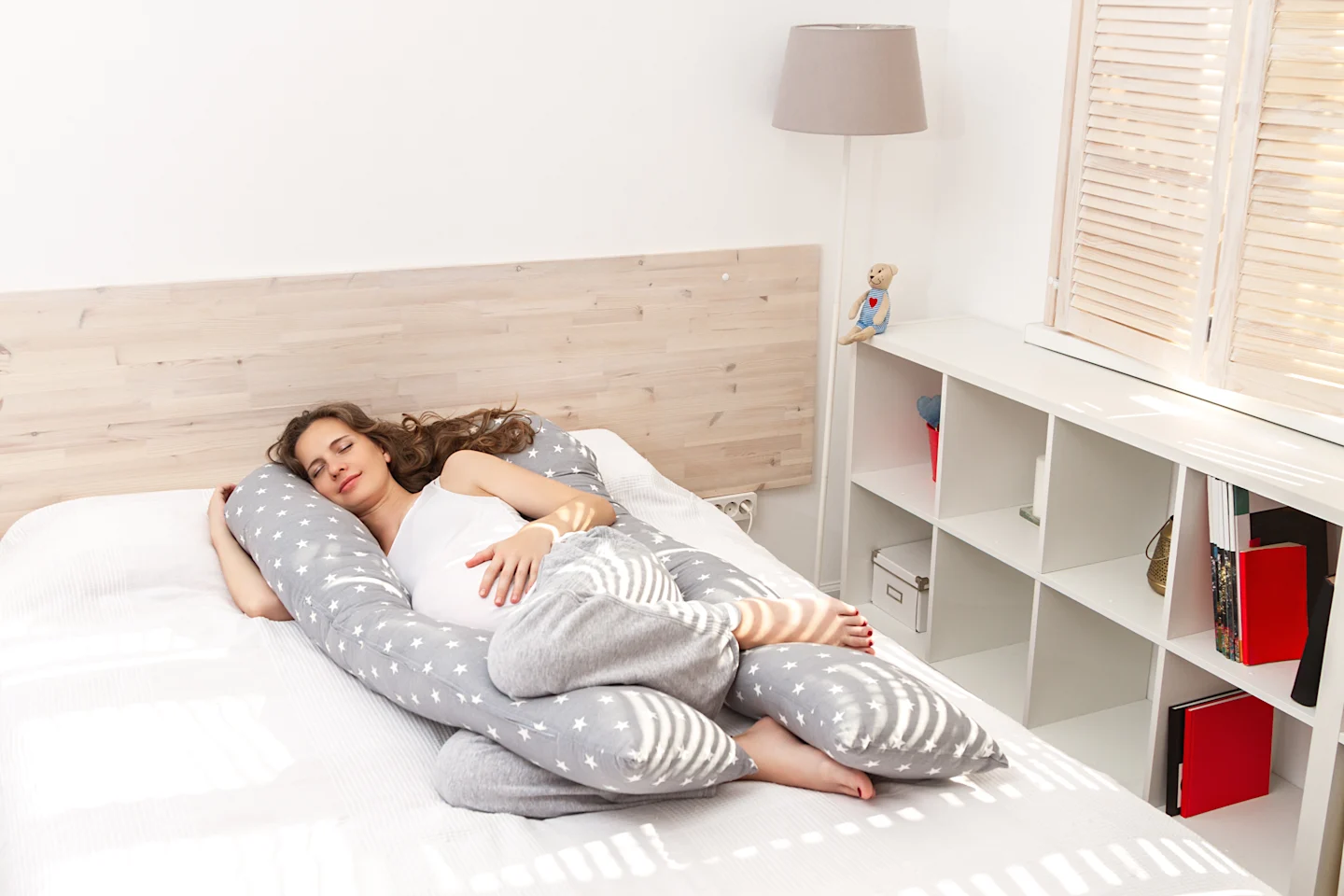
Place the full body U-shaped pregnancy pillow with the "U" connected end behind your head so it supports your head and both sides when you lay down.
Using I-shaped pregnancy pillow to sleep

Lay down on the side you want to sleep on and place the I-shaped pregnancy pillow, also known as a body pillow, on the side that you want to be supported.
How to position a pregnancy pillow step by step
Whichever pillow you choose, the goal is the same: keep your spine in a neutral line and take pressure off your hips and back. Here’s a simple way to set up.
Settle onto your side: Lie down with one or both knees bent. Side-sleeping is the most comfortable position for most of pregnancy and is recommended later on [2].
Place the pillow between your knees and thighs: This keeps your hips level and eases strain on your lower back and pelvis.
Support your belly: Tuck part of the pillow or a separate wedge under your tummy to take the pulling pressure off your back.
Add support behind your back: A pillow behind you helps you stay on your side and gives you something to lean into.
Adjust until it feels right: Fine-tune the height and placement so that your head, spine, and hips form a single comfortable line.
Ways to use a pregnancy pillow after baby’s born
Good news: There's no need to get rid of your maternity pillow after delivery!
Here are a few ideas:
Keep using it for comfortable sleep while your body recovers from delivery or if you toss and turn a lot.
Use it for support while bottle feeding, breastfeeding, or holding your baby. (But don't let them sleep on it.) They can make feeding more comfortable for you and prevent Mommy's wrist.
As your baby gets older, it can be used to help prop them up as they learn to sit on their own.
If you have older kids, they can use it for comfort, too! Bring it on long car rides or relax with it on the couch.
Share article:

Note: The content on this site is for informational purposes only and should not replace medical advice from your doctor, pediatrician, or medical professional. If you have questions or concerns, you should contact a medical professional.
2 Sources
Share article: