9 - 11 month old baby feeding schedule: How much should they eat?
Updated Sep 03, 2026



As your baby inches closer to toddlerhood, feedings may start to feel different. Many babies at this age are exploring solids more confidently. Milk may take on a slightly different role, but it’s still the main source of nutrition for your little one! Keep reading for all you need to know about feeding your 9 - 11 month old.
9 - 11 month old baby sample feeding schedules
The following example can help you plan your baby’s feeding schedule from about 9 - 11 months of age. Use it as a guide to find what best suits your baby’s needs. Schedules are meant to bend, stretch, and occasionally be tossed out the window. You’ll know what works best for your family!
9 month sample feeding schedule
Time of day | Feeding |
6:30 AM | Nurse or bottle (wake up) |
9:30 AM | Nurse or bottle Solid meal |
1:30 PM | Nurse or bottle |
4:30 PM | Nurse or bottle Solid meal |
7:00 PM | Nurse or bottle (before bed) |
11:00 PM | Optional dream feed |
10 month sample feeding schedule
Time of day | Feeding |
6:30 AM | Nurse or bottle (wake up) |
9:00 AM AM | Nurse or bottle Solid meal |
1:30 PM | Nurse or bottle Solid meal |
4:30 PM | Nurse or bottle |
7:00 PM | Nurse or bottle (before bed) Solid meal |
11:00 PM | Optional dream feed |
11 month sample feeding schedule
Time of day | Feeding |
6:30 AM | Nurse or bottle (wake up) |
9:00 AM AM | Nurse or bottle Solid meal |
1:30 PM | Nurse or bottle Solid meal |
4:30 PM | Nurse or bottle |
7:00 PM | Nurse or bottle (before bed) Solid meal |
11:00 PM | Optional dream feed |
How much to feed a 9 - 11 month old: Food chart
What to expect at 9 - 11 months | |
Daily milk intake | About 24 oz (720 mL) of breast milk or formula, per the AAP |
Milk feeds | 4 - 6 nursing sessions or bottles a day |
Solid meals | 2 - 3 a day |
Texture focus | Mostly finger foods |
Meals are getting more exciting (and messier) as new foods and textures come into the mix. Breast milk and formula start shifting into a supporting role, though they're still important. Here's what a typical day tends to look like:
About 24 oz (720 mL) of breast milk or formula: This is what the AAP recommends
at this age.
4 - 6 nursing sessions or bottles: Spread across the day alongside meals.
2 - 3 solid food meals: Your baby is likely ready for more structure around eating.
Mostly finger foods: This is the stage where self-feeding really takes off.
Every baby is different, and things like height and weight factor in. Your medical provider, lactation consultant, or dietitian can help if you have questions about the right amount for your baby.
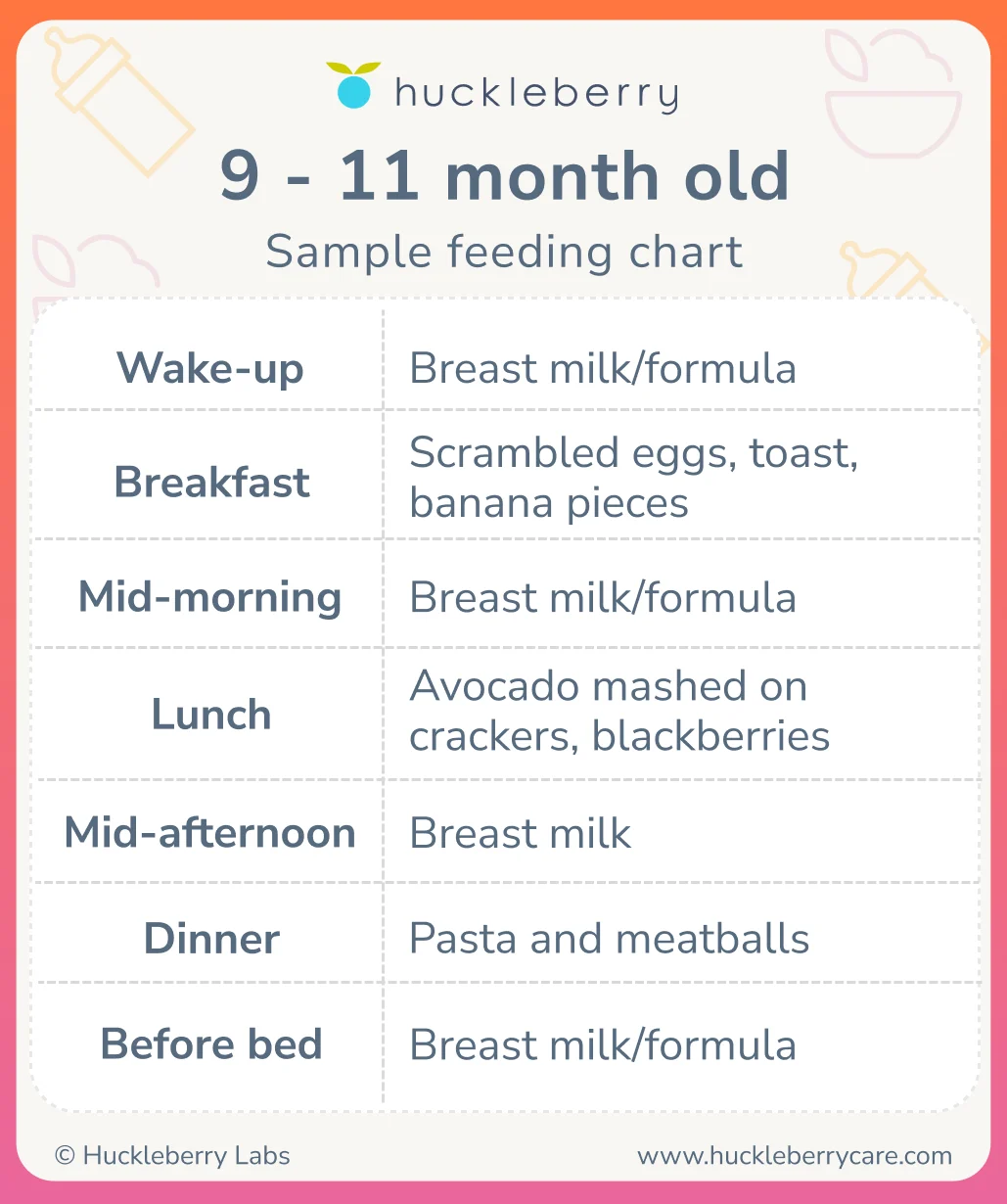
Example 9 - 11 month feeding chart
Time of day | Meal example |
Wake-up: | Breast milk or formula |
Breakfast: | Breast milk or formula Scrambled eggs, toast, banana pieces |
Lunch: | Breast milk or formula Avocado mashed on crackers, blackberries |
Mid-afternoon: | Breast milk or formula |
Dinner: | Breast milk or formula Pasta and meatballs |
Tips for feeding your 9 - 11 month old baby
Tip | Notes |
Try new textures | Offer slightly firmer foods like roasted veggies as your baby gets more confident. Introduce new textures gradually. |
Expect teething dips | Teething can temporarily lower interest in solids. Preferring breast milk or formula for a stretch is normal. |
Encourage self-feeding | Small, soft finger foods let your baby take the lead at meals. |
Keep mealtimes seated | Eating on the move raises the risk of choking, so meals stay in the high chair even when your baby would rather be crawling around. |
Keep serving breast milk and formula | Both stay a key source of nutrition until 12 months. |
Find more details below:
Tip #1: Try new textures
As babies become more confident eaters, they may be ready to explore new textures. Consider offering foods that are a little firmer, such as roasted veggies. Babies may have mixed reactions to new textures and that’s OK — go at your own pace and keep advancing textures as you’re both ready.
Tip #2: Find teething relief
Teething can impact how much your baby eats, especially when it comes to solid foods. Many parents find their baby prefers formula or breast milk during teething and that’s normal!
You can safely offer relief with cool foods such as smoothies, homemade popsicles, or frozen fruit in a mesh feeder.
Tip #3: Encourage self-feeding
Babies around 9 - 11 months old should be eating primarily small, cut-up finger foods over purees (here’s more on baby-led weaning). This means shifting the focus towards self-feeding as much as possible. You can encourage this by offering easy-to-grasp finger foods, placing them on your baby’s tray or plate, and letting your baby bring the food to their mouth at their own pace.
Pre-loading spoons and allowing your baby to take over is a great way to support independence at mealtimes. These opportunities allow your baby to develop important motor skills and tune in to their own hunger and fullness cues to eat the amount of food they need.
Tip #5: Continue serving breast milk and formula
Breast milk and formula still remain the most important source of nutrition for your baby until they are 12 months old.
While it may be tempting to switch it out for cow’s milk or alternative milk, it’s not quite time.
It’s normal for the amount of breast milk or formula to decrease as solid food intake increases, but it’s still an important element of your baby’s diet right now..
Night feedings at 9 - 11 month olds
At 9 - 11 months, many babies can sleep through the night, usually about 11 - 12 hours at night. It helps if your baby has developed independent sleeping skills and gets enough to eat during the day. However, some babies aren’t quite ready to go 12+ hours without a feed and may sleep more soundly with an early morning feeding (around 3:00 - 5:00 AM). Unless directed to by your baby’s medical provider, there’s no need to wake your baby up to eat at this age.
Common feeding challenges for 9 - 11 month olds
Your feeding routine may feel dialed in, but this stage can still throw a few curveballs. Between growing independence, emerging preferences, and a strong desire to do it themselves, feeding can sometimes feel less predictable than before. Don’t worry — these bumps are incredibly common as your little one discovers they are their own person, too!
Here are some feeding challenges you may notice between 9 – 11 months:
Inconsistent appetite
Strong food preferences (and sudden dislikes)
Increased messiness from self-feeding
Short attention spans at meals
Gagging with new textures
Frustration when help is offered
At 9 – 11 months, babies are practicing autonomy everywhere, including at the table. One day they may enthusiastically eat everything in sight, and the next, they might push food away after two bites. It’s common for babies to become frustrated if they want to feed themselves but don’t quite have the coordination yet. Try to stay calm and offer consistent opportunities to practice. These behaviors are signs of growth, not failure — and most are short-lived.
If you’re curious about what lies ahead when it comes to feeding, check out a 1 year feeding schedule. Take a look back at how far you’ve come by revisiting a 7 - 8 month feeding schedule.
Share article:

Note: The content on this site is for informational purposes only and should not replace medical advice from your doctor, pediatrician, or medical professional. If you have questions or concerns, you should contact a medical professional.
1 Sources
Share article: