3 reasons why your baby is crying in their sleep
Updated Sep 03, 2026
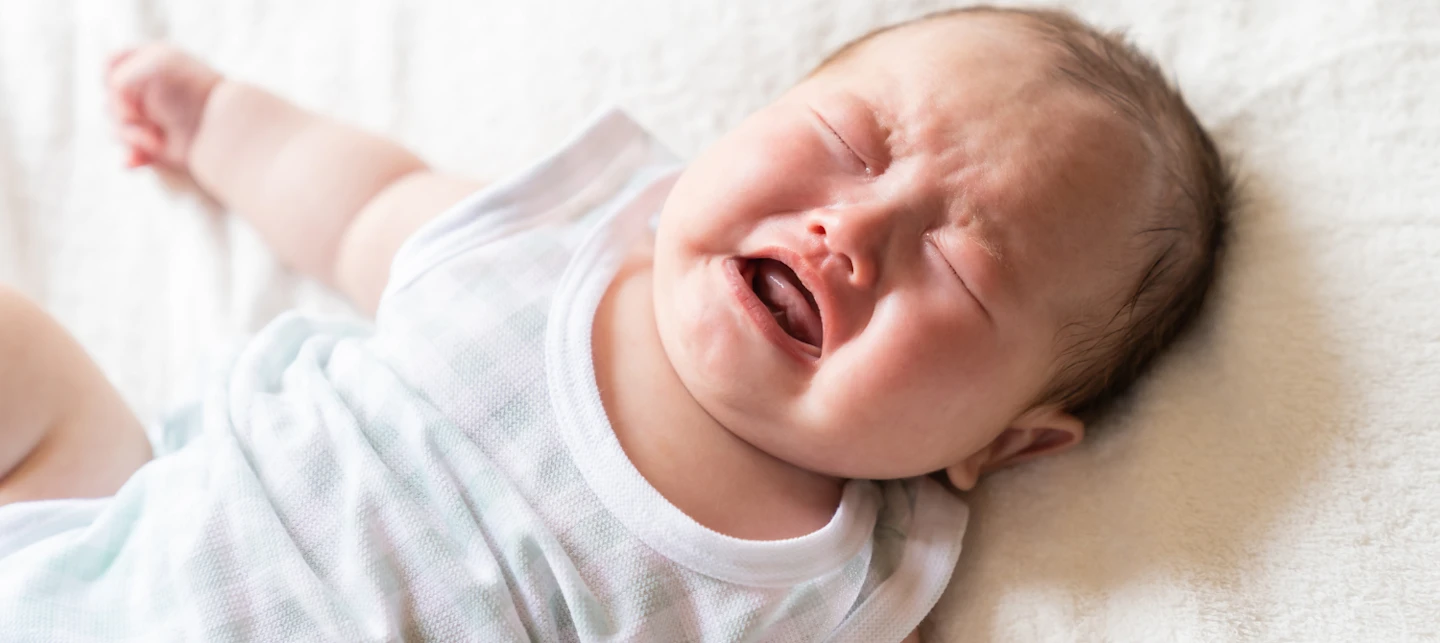


When babies cry in their sleep, many caregivers are often unsure of how to respond. I’s normal to worry that they’re having a nightmare, are hungry, or are otherwise uncomfortable.
What you’re seeing might look a little different each time. Sometimes, it’s soft whimpering or noises during deep sleep, and other times, your baby may briefly stir between sleep cycles and cry out before settling back down. In this article, we’ll walk you through reasons why your baby may be crying in their sleep and give you tips for navigating this type of night waking.
Why do babies cry in their sleep?
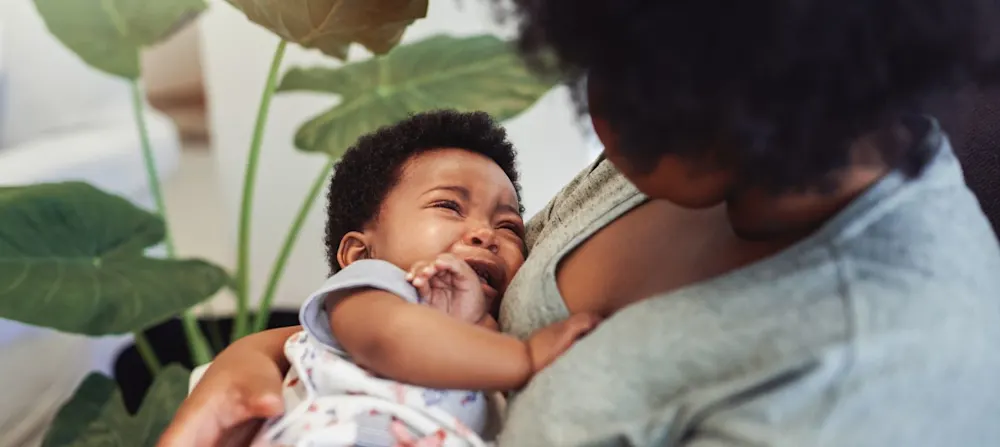
Babies cry in their sleep for a couple of different reasons. Sometimes, crying is simply part of active sleep — babies make all kinds of noises during this phase, from grunts and whimpers to brief cries, often without ever fully waking. Other times, your baby may cry out during an arousal between sleep cycles.
The 3 most common reasons why babies cry in their sleep
If your baby is crying in their sleep, chances are it comes down to one of these three factors.
Sleep cycle transitions
Baby sleep patterns in the newborn stage are quite different from adult ones. Their cycles are shorter and lighter, which means more opportunities for brief wake-ups and the fussing that comes with them.
Around 3 - 4 months, your baby’s sleep begins to mature — and with that comes a new dynamic. Brief awakenings between cycles that your newborn may have slept right through can start to become fuller wake-ups if your baby has developed sleep associations and needs those conditions recreated in order to settle back down.
By around 6 months and beyond, many babies can develop longer, more predictable stretches. This is especially true if they’ve had practice with independent sleep skills and age-appropriate routines.
Overtiredness
It sounds counterintuitive, but an overtired baby often has a harder time staying asleep than a well-rested one. Here’s why:
When babies are awake longer than they can comfortably handle ¸— or have later bedtimes—their bodies release fatigue-fighting hormones that make it even harder to fall and stay asleep [1].
Wake windows are short — for a 3 month old, that’s typically just 60 - 120 minutes. Push past that, and you’re likely in overtired territory.
Discomfort
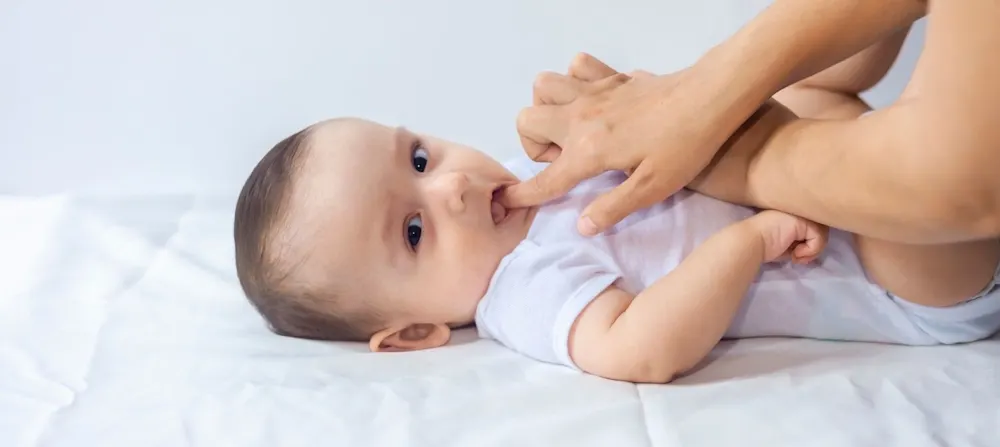
General discomfort — from teething, illness, or environmental factors like room temperature or clothing — can cause babies to cry out during sleep. Teething can begin as early as 3 months, though most babies cut their first tooth somewhere between 6 and 10 months [2].
Hunger tends to look a little different: rather than a brief cry during sleep, it usually results in a fuller awakening as your baby signals they’re ready to eat.
Can babies have nightmares?
According to the AAP, nightmares may begin as young as 6 months, though they tend to become more common as children get older and are most common between 3 and 12 years old [3]. In young babies, crying or fussing during sleep is far more likely to be tied to the causes we’ve outlined above than to dreaming. Those little smiles or grimaces you might catch your baby making during sleep are most likely just involuntary movements — but we can still dream, right?
Is a baby crying in their sleep something to worry about?
Occasional crying during sleep isn’t usually a cause for alarm. Even still, most caregivers want to do everything they can to ensure their baby sleeps peacefully. After all, if your baby is frequently crying in their sleep, they may be able to sleep through it, but you may not.
Newborns (0 - 3 months)
Newborns are notoriously unpredictable sleepers, and for good reason. Here are some notable sleep characteristics to keep in mind:
Newborns wake more frequently than older babies, thanks to their still-developing nervous systems and frequent need to eat, leading to more sleep disturbances — such as crying without being fully awake.
Newborns aren’t developmentally ready to consistently settle themselves to sleep (and back to sleep) without help.
All of this is developmentally normal. The newborn stage is temporary, even when it doesn’t feel like it!
If your newborn is crying in their sleep and needing a feeding or a diaper change is ruled out as a reason, it's worth checking that your baby is dressed appropriately for the room temperature.
Avoid dressing your baby in heavy layers — usually whatever you’re wearing plus one extra layer (like a long-sleeved sleeper and sleep sack) is just right. Do a quick check of the temperature and clothing situation and see if any small adjustments help settle them.
Infants (4 - 12 months)
As your baby grows out of the newborn stage, their sleep continues to evolve in new ways. Babies experience many developmental shifts after the newborn period, including changes in sleep. You’ve likely already heard whispers of the 4 month sleep regression or the 8 month sleep regression.
Babies who are just learning to sleep on their own may struggle more with transitioning between sleep cycles and self-soothing, leading to crying between cycles.
If you’re navigating sleep changes and could use a little extra support, Huckleberry Premium offers personalized sleep plans tailored to your child’s specific challenges. Plans are customized to your child with step-by-step instructions based on your parenting preferences.
Brief awakenings between sleep cycles are usually nothing to worry about during the infant stage. Often, the most effective advice is simply to wait. Here’s what that can look like in practice:
Give your baby a few minutes to see if they’ll settle on their own [4] before rushing in.
Try to resist the urge to intervene at the first whimper — whining, moaning, and whimpering during sleep is quite common at this age.
Many babies will fall back to sleep in minutes if given the chance, letting you do the same!
Toddlers (12 - 36 months)
Sleep continues to shift as your little one enters toddlerhood. And while it can still have its tricky moments, you’ve got more tools in your toolkit than ever.
Here’s what their sleep typically looks like:
Children may experience new sleep challenges around their first birthday, sometimes called the “12 month sleep regression,” which can disrupt both naps and overnight sleep.
Toddlers are also known for testing limits and resisting naps — a tough combination when it comes to getting enough rest.
Sleep loss from early morning rising, missed or short naps, or later bedtimes can snowball into chronic overtiredness.
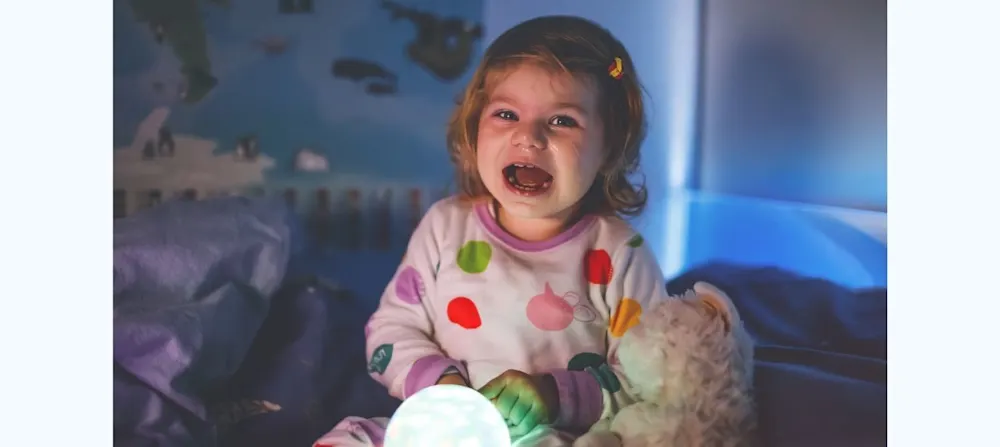
When toddlers cry in their sleep, overtiredness and difficulty transitioning between sleep cycles are usually the most common culprits, especially if your little one is still working on independent sleep skills.
Overtired toddlers tend to cry more before falling asleep and may cry briefly between sleep cycles throughout the night. Giving toddlers a lovey or comfort object to sleep with may help them settle back down between cycles.
When to seek professional help
Most of the time, a baby crying in their sleep is nothing to worry about. But there are moments when it’s worth calling your pediatrician. Trust your gut — you know your baby best. Here are some signs it may be time to seek professional help:
Your baby is frequently screaming in their sleep, and nothing you try seems to help.
They seem to be in pain or significant discomfort that you can’t identify the cause of or soothe away.
You notice other symptoms alongside the crying, such as a fever, tugging at their ears, or changes in eating habits, which can be signs of an ear infection or another illness.
Your baby is consistently inconsolable for long stretches during the night.
You suspect a food sensitivity may be disrupting their sleep and causing discomfort.
Something just feels off — even if you can’t put your finger on it, a call to your pediatrician is always a reasonable step.
Share article:

Note: The content on this site is for informational purposes only and should not replace medical advice from your doctor, pediatrician, or medical professional. If you have questions or concerns, you should contact a medical professional.
5 Sources
Share article: