Signs your baby is too hot while sleeping
Updated Nov 06, 2026
Up-to-date


"Is baby too warm?" might’ve crossed your mind more than once during a late-night check on a sleeping baby or during a snuggly daytime nap.
You can't always tell at a glance. It could look like a sweaty neck, hair stuck to their forehead, flushed cheeks, or just a feeling. But if the room feels comfortable to you, your baby likely is too. Aim for about one light layer more than you’d wear. A simple touch of the neck or chest can help you assess.
In this article, we’ll cover the signs of overheating for little ones, why hands and feet aren’t the signs to trust, and how to know when it’s time to take action by adjusting clothing, cooling the room, or calling your baby’s healthcare professional.
How to tell if your baby is too hot while sleeping
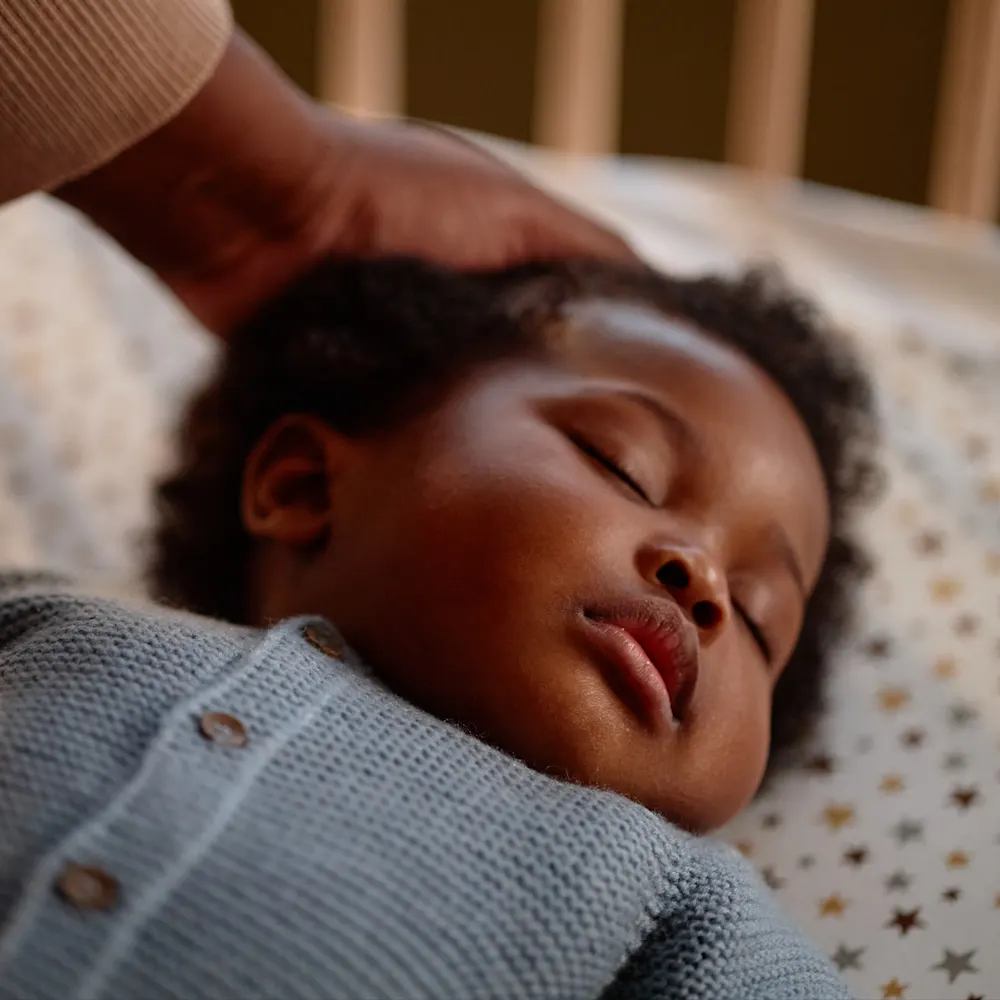
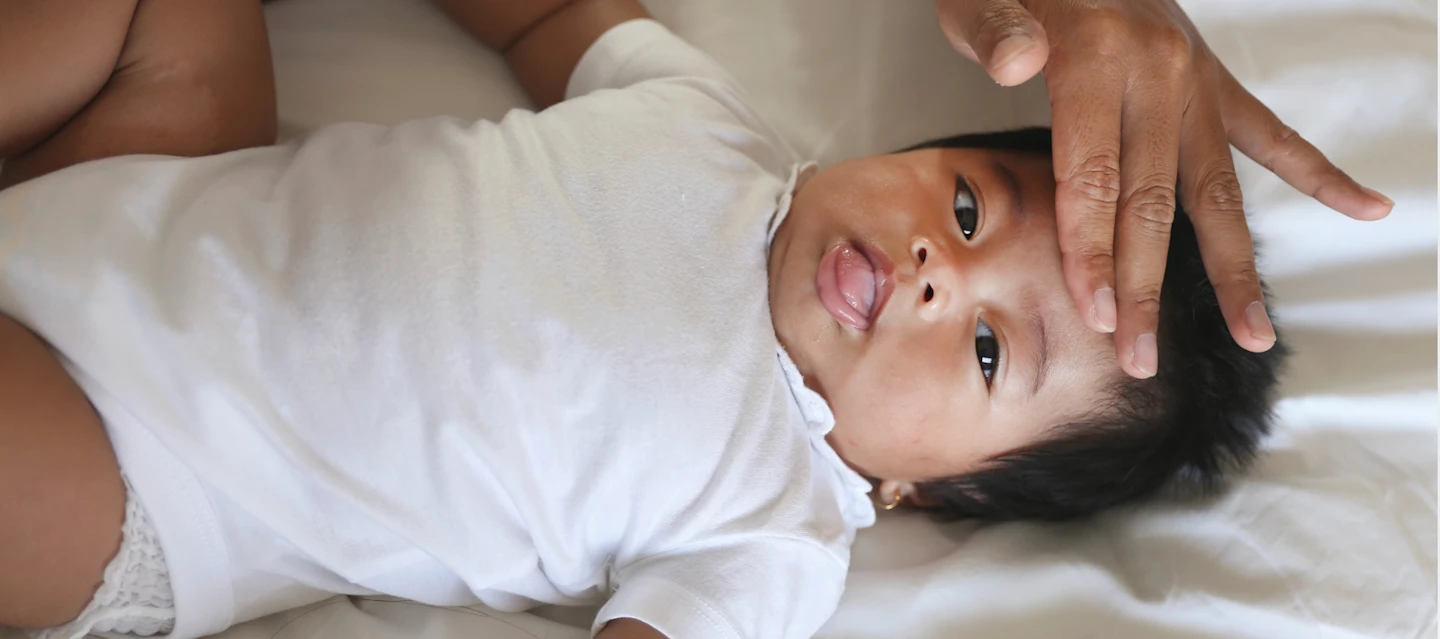
The most reliable way to check if your baby is overheated has nothing to do with their hands or their feet. Instead, slide two fingers along the back of your baby's neck or rest your palm flat against their chest.
Warm, damp skin in either spot (neck or chest) is a better read on your baby's core temperature than anything you'll feel at their fingertips or toes.
A baby who's running too hot usually shows more than one sign at once. Damp or sweaty hair at the nape of the neck, a chest that feels warm and a little clammy, and flushed or red cheeks are the three most common tells.
You might also notice your little one breathing quicker than normal, acting more restless or fussy than usual, or waking more often than their typical pattern.
As a quick checklist, further signs may include:
Damp or sweaty hair, especially at the neckline
A warm, clammy, or sweaty chest
Flushed or red cheeks
Breathing that’s faster than usual and doesn’t settle
Restlessness, fussiness, or more frequent waking*
Heat rash (small red bumps, often around the neck, chest, or diaper area) (If the rash looks more like raised, itchy welts that come and go or move around the body, it may be hives rather than heat rash.) [1]
Damp sleep clothing or bedding
Feels hot even through their clothing
*Waking more than usual on its own is common and usually has nothing to do with temperature — developmental leaps, teething discomfort, hunger, a cold, or simply not yet having learned independent sleep skills are more frequent culprits. Overheating is more likely when wakings happen alongside the signs above.
Why hands and feet feel hot but do not tell the full story
If you've ever touched your baby’s hands or feet and been surprised by how cool they felt — or, now and then, how warm — you're not imagining things, and it’s usually nothing to worry about.
Hands and feet aren’t a reliable guide to your baby’s temperature. They usually feel cooler than the rest of the body, which is normal, so what you notice at your baby’s fingers and toes may not match how warm they actually are [2].
So if your baby’s fingers or toes feel chilly, check their neck and chest before adding another layer. Cool hands and feet don’t necessarily mean your baby is cold.
The same goes the other way: if you're noticing your baby's feet are hot while sleeping, or their hands feel hot to the touch, that alone isn't a reliable read on whether they're overheating. Instead, focus on the neck and the chest. If those two spots feel comfortable and dry, your baby is likely at a comfortable temperature, even if their toes or fingers tell a different story.
How hot is too hot? Safe room temperature for baby sleep
So what temperature is too hot for a baby to sleep in? There isn’t one universal answer — the American Academy of Pediatrics (AAP) has intentionally declined to recommend a specific number, since what counts as “too hot” depends on your climate, your home, and how your baby is dressed.
Their guidance instead is to keep the room cool and comfortable, and to dress your baby appropriately for it — generally no more than one extra light layer beyond what you’d wear yourself to feel comfortable.
Some expert groups have translated that principle into specific ranges for practical guidance: many U.S. sources point to somewhere between 68°F and 72°F (20°C - 22°C) as a comfortable zone, while the UK’s National Health Service (NHS) recommends a cooler 16°C - 20°C (about 61°F - 68°F) [3]. Both are reasonable interpretations of the same underlying goal and neither is “the” official number.
Not all families live in environments where it’s realistic to hit these ranges. What matters most is dressing your baby lightly for the temperature, keeping airflow moving as best as possible, and checking their neck and chest rather than chasing a specific thermostat number.
Here's a quick reference for how this might look in practice — treat it as a general guide rather than a strict target, especially if your home regularly runs warmer or cooler than this range:
Room temperature | What to adjust |
Below 61°F (16°C) | Add a heavier sleep sack or a light extra layer underneath. |
61°F - 68°F (16°C - 20°C) — the NHS recommended range. | One layer plus a sleep sack is usually enough. |
68°F - 72°F (20°C - 22°C) — commonly cited in the US | One light layer plus a sleep sack is usually enough. |
73°F - 75°F (23°C - 24°C) | Switch to a lower-TOG sleep sack or drop the layer underneath (TOG, or Thermal Overall Grade, indicates how much warmth a sleep sack provides. This is usually found on the packaging or the tag of the sleep sack.) Consider adding a fan. |
76°F - 78°F (24°C - 26°C) | A diaper plus a lightweight, breathable sleep sack can be enough. Check the neck and chest often. Consider adding a fan. |
80°F (27°C) and up | Use the lightest sleep sack you have (or just a diaper) and check on baby more often. Consider adding a fan. |
One tool worth considering is a fan. One study found fan use during sleep was associated with a lower risk of SIDS, particularly in less-ideal sleep setups — possibly because moving air helps prevent the pocket of warm air that can build up around a sleeping baby's face [4]. That said, the AAP currently says there isn't enough evidence to formally recommend fans as a SIDS risk-reduction strategy. So think of a fan as a reasonable, low-risk option to consider rather than a proven necessity. When using a fan, keep cords out of the way of baby’s reach and avoid pointing the fan directly at your little one.
Do babies' temperatures rise when sleeping?
Body temperature naturally shifts across a 24-hour cycle [5].
Steady overheating looks different. It doesn't fade after a few minutes without intervention, and it usually shows up alongside more than one sign from the checklist above. A fever is different, too, as it comes with a measured temperature spike that often persists across a nap or the whole night. Fevers aren’t fixed by removing a layer or cooling the room. If a light layer change and a few minutes don't bring your baby back to a comfortable neck and chest temperature, take their temperature.
In babies under 3 months, a rectal temperature of 100.4F (38C) or higher is always a reason to call your baby’s healthcare professional right away. In older babies, if the temperature comes down after cooling and removing a layer, it was likely overheating; if it stays elevated, treat it as a possible fever and reach out to your baby’s doctor.
Why some babies run hot when sleeping
Some babies do seem to run warmer compared to others. Babies also have more skin surface relative to their body weight than adults do, making them feel warmer than adults at night [6].
A few everyday things can add extra heat on top of that baseline:
Over-bundling with too many layers
A swaddle or sleep sack layered on top of a onesie or pajamas in an already-warm room
Teething, which can raise a baby's temperature slightly for a day or two [7]
Recent vaccinations, which can cause a similar slight rise in temperature [8]
Being an active sleeper who kicks and wiggles more than a still sleeper
A nursery that gets direct sun or sits above a warmer spot in the house
How to dress your baby and cool the room for safer sleep
A simple rule of thumb makes dressing for any room temperature easier: dress your baby in no more than one more light layer than you'd be comfortable wearing yourself in that same room. If you'd sleep in a T-shirt, your baby may need a onesie and a sleep sack.
Breathable, natural fabrics like cotton help your baby's skin release heat instead of trapping it. You can also match your sleep sack's TOG rating to the room. For instance, lighter TOG sacks are for warmer rooms, and heavier TOG sacks are for cooler ones.
For a full season-by-season breakdown, see our guide on how to dress a baby for sleep.
Overheating and safe sleep: the connection every parent should know
Beyond it being a comfort issue, overheating is also an established risk factor for SIDS [9]. While SIDS risk is highest during the first 6 months — peaking between 1 and 4 months — safe sleep recommendations apply throughout your baby’s first year [10]. The good news is that this is one of the more modifiable risk factors and a few small, practical changes go a long way. A few factors make it easier to build a sleep space that works with your baby's temperature regulation instead of against it:
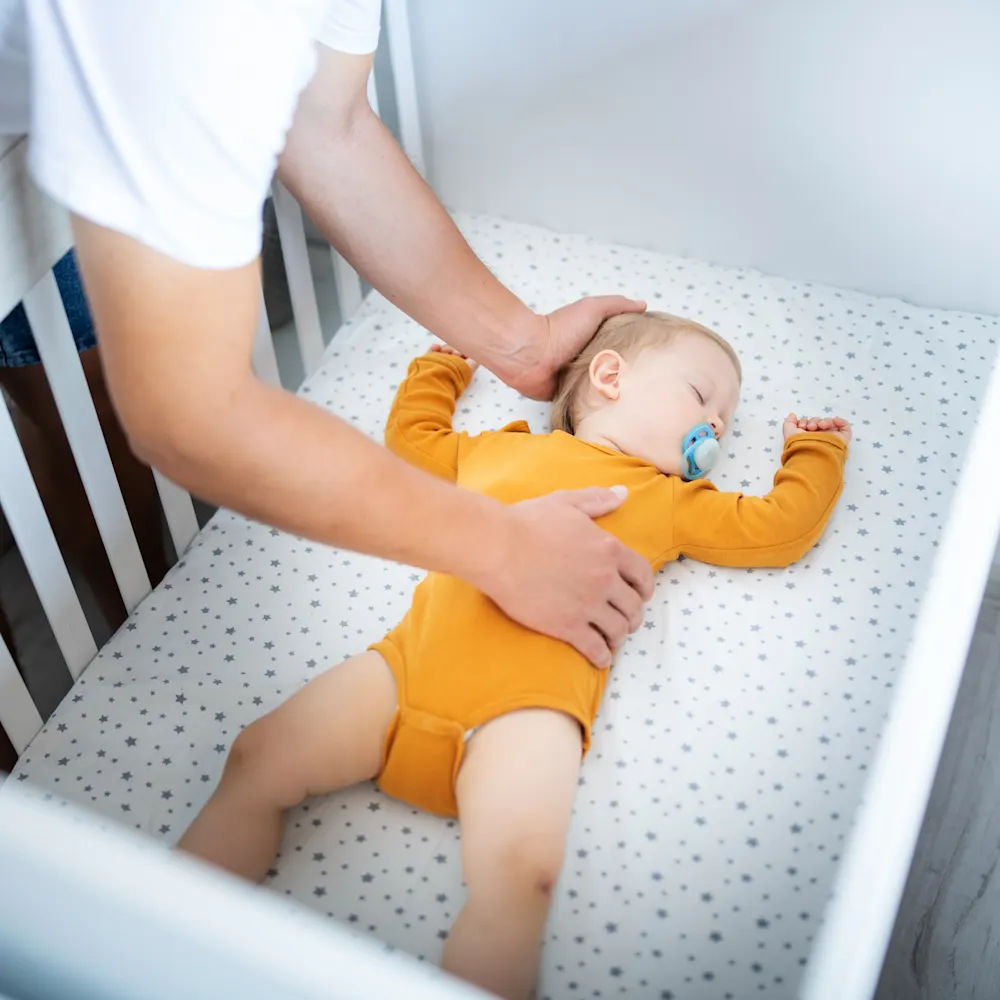
Keep the crib bare with a well-fitted sheet (no loose blankets, pillows, or crib bumpers)
Skip hats indoors.
Position the crib away from direct heat sources, like a radiator, a heating vent, or a window that gets strong afternoon sun
Cover windows in rooms that get direct sunlight (curtains, blackout shades, etc.)
Room-share instead of bed-share for at least the first 6 months, so baby sleeps on their own separate, bare surface rather than sharing an adult's body heat and bedding
Check the room’s temperature one last time before you turn in for the night
Ensure your baby is well hydrated (breast milk or formula for babies 0-12 months, small amounts of water are OK after 6 months)
What to do if you think your baby is overheating
If your baby's chest or neck feels hot, or they're sweaty or flushed, start by removing a layer and moving them to a cooler, more comfortable environment. You don't need to panic or completely undress them; small adjustments are often enough.
If your baby's chest feels comfortably warm and dry, there's generally no need to add or remove layers based on their hands and feet alone. Remember, cool fingers and toes don't necessarily mean your baby is cold, and warm hands and feet don't necessarily mean they're overheating.
When to call your doctor
Most of the time, a warm baby is a quick fix. Cool the room, and/or remove a layer, and they settle back down. But there are a few specific situations, most tied to an actual fever rather than everyday overheating, where it's worth reaching out to your baby's healthcare provider.
A rectal temperature of 100.4°F (38°C) or higher in a baby under 3 months old is always a reason to contact your baby’s healthcare provider right away for prompt guidance. [11, 12] Call your baby’s doctor right away or go in to be seen. Don't wait to see if the fever comes down on its own at that age.
For babies older than 3 months old, a temperature higher than 100.4°F (38°C) for more than one day is reason to schedule an appointment [12].
Beyond that fever threshold, reach out to your little one’s doctor if:
Your baby still feels warm through the chest or neck after you've cooled the room and removed a layer
Warmth shows up alongside a spreading heat rash, rapid breathing that doesn’t calm back down, unusual sleepiness, or difficulty waking
Your baby is feeding poorly or seems unusually hard to settle
You notice fewer wet diapers than usual, which can signal dehydration
You know your baby best. If something feels off, even without every symptom on this list, it's always OK to call. That's what your child’s doctor is there for.
Share article:

Note: The content on this site is for informational purposes only and should not replace medical advice from your doctor, pediatrician, or medical professional. If you have questions or concerns, you should contact a medical professional.
12 Sources
Share article: