Newborn essentials checklist: How to prepare for your baby
Updated Oct 10, 2026
Up-to-date



Preparing for a baby has a funny way of making everything feel urgent. But making sure your baby has a safe place to sleep shouldn't feel as overwhelming as deciding whether you need a bottle sterilizer, wipe warmer, baby food maker, and six different swaddles. (Spoiler: probably not.)
While every family will have its own preferences, there are a handful of items that make those first days with a newborn simpler and a little less stressful. In this article, we'll cover when parents typically start preparing, how to tell a true essential from a nice-to-have, what to handle at home beyond shopping, and a few common prep mistakes worth avoiding along the way. Plus, there’s a newborn checklist broken down by category to make things easy for you to reference.
When do parents usually start preparing for a newborn?
There's no single right time to start, but most families find that starting gradually is helpful.
If you're early in pregnancy and just starting to think about this, that's a fine place to be. If you're 36 weeks along and only halfway through your list, that's also fine. Things can come together quickly.
Second or third trimester planning
Many parents start researching and registering once morning sickness eases and energy returns, often around 20 - 28 weeks. That mid-pregnancy window tends to be when reading labels, comparing strollers, and building a registry feel manageable instead of overwhelming. From there, the pace usually picks up in the final trimester. This can vary based on the situation, though.
Gradually purchasing essentials
Big-ticket items like a crib, car seat, and stroller tend to get bought first, partly because they take longer to research and partly because some (like car seats) are needed the moment your baby leaves the hospital. Smaller items (diapers, swaddles, burp cloths, bottles) often get added over several shopping trips rather than one big haul, and that's completely normal.
Registries can help spread the cost and timing out, since friends and family often want to gift the smaller items you’ll consistently need.
Setting up the home and routines
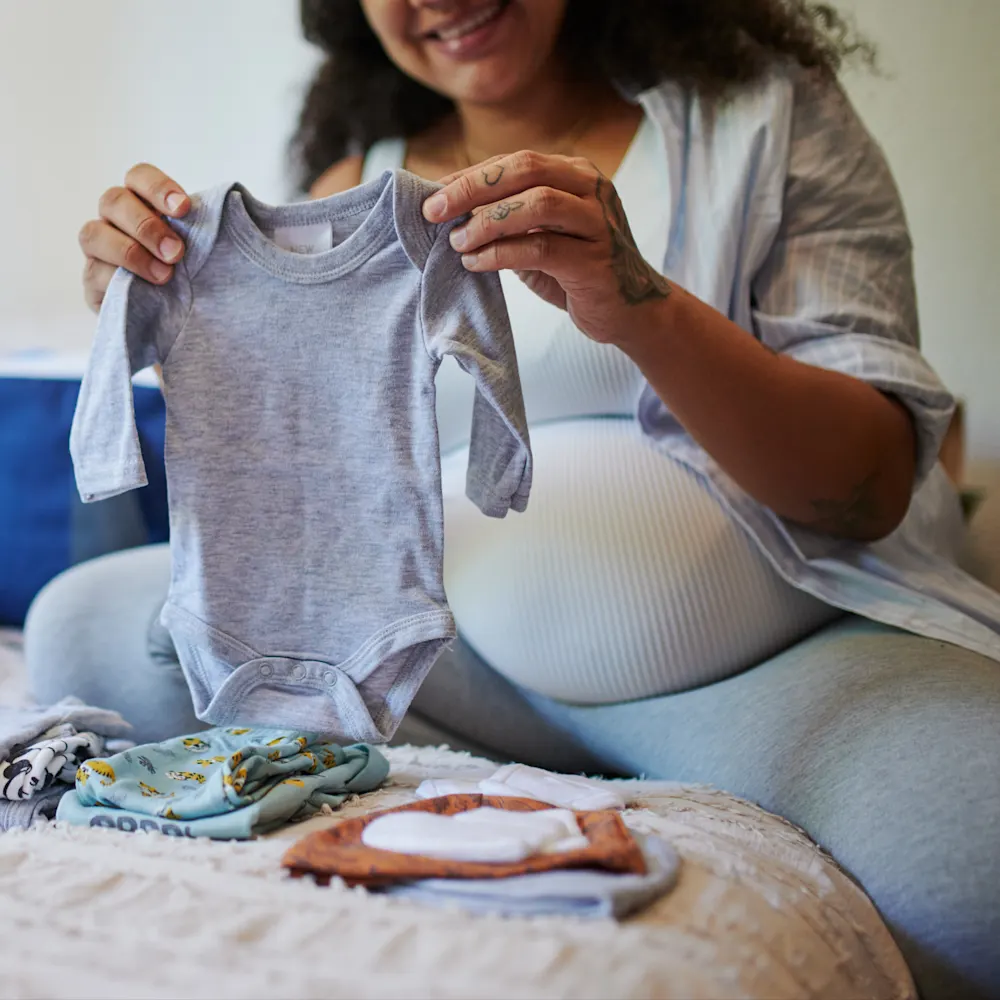
The last 6 - 8 weeks of your pregnancy, or the end of your third trimester, is often when parents wash and organize baby clothes by size, set up a changing station, figure out where diapers, wipes, and swaddles will actually live day to day. Building a rough routine, such as where to put the bassinet, or how nighttime feeds will work, tends to reduce decision fatigue once your little one arrives. It doesn't need to be perfect. You’ll likely make adjustments as you go too, as you learn what works best for you after baby’s arrival.
Adjusting plans as the due date approaches
Preferences shift. A bassinet you loved in month 6 might get swapped for a different setup once you picture actually using it at 2 AM. Or a feeding plan that sounded straightforward on paper can look different once you're weighing what real life with a newborn actually feels like. Many parents also find their priorities narrow as the due date gets closer, with fewer nice-to-have purchases and more focus on the things that will matter most in the first few weeks.
What counts as a newborn essential vs. a nice-to-have?
Baby gear marketing tends to blur this line sometimes. Everything looks essential when it's styled next to a sleeping newborn. In practice, three questions can help sort it out.
Does it meet a daily care need, or does it add convenience? Bottles, formula or breast milk, and a safe place to sleep meet the need. A bottle warmer, a nursing pillow, a wipe warmer, or a sound machine adds convenience for you and your little one, but feeding and sleep can both happen without them. This is the main place marketing muddies the water: an item can be adjacent to feeding or sleep without it being essential.
Is it needed in the first days home, or can it wait? Newborns don't need toys, a full wardrobe, or a shelf of bath products in the first days home. Those can be added later, once you have a better sense of what your baby actually needs and what you're reaching for.
Is it solving a problem you have, or one you might have? Gas drops or specialty bottles for fussiness pop up on some registries, and they can solve real problems but only if your baby actually has them. Buying ahead for a problem that may never show up is often how nice-to-haves end up disguised as essentials. It's usually easier (and cheaper) to wait and address these as they come up, rather than stocking up in advance.
A useful gut check: if you removed the item, would your baby's basic care be harder tomorrow? If not, it can probably wait. (You can always ask other parents this question to get a feel for what is a need!)
Newborn essentials checklist by category
The following chart doesn’t need to be an exhaustive shopping list. Use it to cover the basics, then add from there based on how your family actually settles in. Every family is unique; you will know what works best for you.
Category | Essential items | Notes |
Sleep | Crib or bassinet, firm mattress, fitted sheet | Keep the sleep space bare — no blankets, pillows, or bumpers, per AAP safe sleep guidance [1] |
Feeding | Bottles and formula, or nursing supplies like a pump and nursing pads | It depends on the feeding method, and many parents use a combination. It’s OK to have a few things for formula feeding and a few things for breastfeeding on hand |
Diapering | Diapers, wipes, a changing surface | Stock only a small amount of newborn-size diapers first. Babies often grow out of them fast |
Clothing | Onesies, sleepers, a few weather-appropriate layers | Buy just a few items in newborn sizes, since some babies outgrow that size within weeks |
Health and hygiene | Digital rectal thermometer, nail file, baby soap, soft towels | Rectal temperature is the standard for core body temperature accuracy for babies. Fragrance-free products can be helpful for newborn skin. |
Things to do before baby arrives (beyond buying items)
Getting ready for your little one to come home isn't only about what's in your cart. Some of the most useful prep work has nothing to do with shopping.
Setting up sleep and diapering areas: Have the crib or bassinet assembled and a changing station stocked before birth, if possible. Diapers, wipes, diaper cream, extra change of clothes, and burp cloths can all be useful at this station.
Washing baby clothes and linen: New fabric can carry manufacturing residue or sizing chemicals, so many parents wash items before first use with a gentle or fragrance-free detergent. Or maybe you just want that new baby detergent smell on all their clothes! It’s not a universal requirement to use specialty detergent. (Some babies show no sensitivity at all.) But it can be a preference for you.
Learning basic newborn care routines: Diapering, swaddling, and safe sleep setup are worth practicing or at least reading through before your baby arrives, so the first attempt isn't at 3 AM. You can ask your nurses or providers in the hospital or birthing center for any tips on diapering and swaddling, too.
Arranging support for the early weeks: Meal trains, help from family, being on the same page as your partner, or support from a postpartum doula can make more of a difference than anything on a gear list.
How to prepare your home for a newborn
A nursery is nice to have, but home readiness is really about function, not decor. In fact, room-sharing is recommended for at least the first 6 months of your little one’s life, so the nursery might not be essential to set up before birth (unless you want to) [2].
Safe and accessible sleeping space: According to the American Academy of Pediatrics (AAP), wherever your baby sleeps — nursery, your room, or both — it should meet the same safe sleep basics: firm surface and nothing loose in the space [3].
Key contacts and info within easy reach: Save the number of your baby’s medical provider, poison control, and the nearest urgent care somewhere visible. This may be a note on the fridge, a pinned contact, or whatever you'll actually see. It's one less thing to hunt for if you ever need it in a hurry.
Easy access to feeding and diaper supplies: Keep a small stock of diapers, wipes, and feeding supplies on each floor of your home, or at least near wherever you spend the most time. Creating feeding and diaper “stations” can be helpful. This may look like a small corner stocked with bottles and burp cloths or a 3-tier cart filled with diapers and wipes. Make it work for you and your family’s needs!
Simple organization for daily routines: Whether your nursery is beautifully decorated or still a work in progress, keeping everyday essentials organized can make life with a newborn much easier. You need to be able to find a clean onesie and a diaper where you can grab them quickly.
A way to check room temperature: Newborns can't regulate body temperature as well as older babies, so a room thermometer can help you keep the sleep space in a comfortable range rather than guessing by feel.
An easy system for baby laundry: Newborns go through several outfit changes a day between spit-up and blowouts. A labeled hamper or bin just for baby items keeps tiny socks and onesies from getting lost in the regular wash.
How much you really need before the baby is born
It's tempting to want everything settled before your due date. Most of it doesn't have to be. Here are 3 foundational steps to help guide you.
1. Start with essentials only.
Cover sleep, feeding, diapering, clothing, health and hygiene, and you've covered what your baby needs in the first days home.
2. Leave room for flexibility.
You won't know which bottle your baby (or you) prefer, or whether a swaddle actually helps them settle, until you're using it.
3. Adjust purchases once routines are established.
Many families find their real gear needs become clear a few weeks in, once feeding and sleep patterns start to take shape.
Common newborn preparation mistakes to avoid
First-time parents tend to feel pressure to have everything figured out in advance. That pressure is understandable, but it can also lead to prep that focuses on the wrong things: more shopping, more research, more "just in case" purchases, without necessarily making the first few weeks any easier. A few patterns are worth watching for, since they tend to show up regardless of how much planning goes in.
Buying too many items upfront: Newborns use surprisingly little gear. Overbuying often means store returns or products that get used once.
Focusing on products instead of routines: A well-stocked nursery doesn't replace knowing how to swaddle, feed, or soothe your baby. Take time to learn and practice the routines of baby care.
Not accounting for space or storage: Diapers, wipes, and clothing sizes pile up fast. Plan storage before the boxes arrive, rather than in the aftermath of “We have no space!” spirals.
Skipping planning for postpartum: Postpartum recovery takes real time and real help. Lining up postpartum support for meals, errands, and rest is as much a part of preparation as anything you'll buy.
Share article:

Note: The content on this site is for informational purposes only and should not replace medical advice from your doctor, pediatrician, or medical professional. If you have questions or concerns, you should contact a medical professional.
3 Sources
Share article: